 Steven Zultanski’s Pad (Los Angeles: Make Now Press, 2010) hilariously foregrounds the propensity of masculinist experimental writing.
Zultanski builds on the work of Georges Perec (in An Attempt at Exhausting a Place in Paris in which he describes everything he observes from a café window over 3 days in October 1974), Tan Lin (in Bib in which he obsessively enumerates all of his reading materials and the length of time spent on each) and Daniel Spoerri (in An Anecdoted Topography of Chance in which he maps the histories of every item spread across his kitchen table).
Perec, Lin and Spoerri catalogue the random assemblages of the mundane, creating a level of significance simply through their application of choice. The resultant manuscripts are both socio-historical mappings of possessions, habits and behaviours and conceptual novels in which the authors abandon narrative intention in favour of compositional intention. The act of recording behavior and observation borders on the obsessive and yet frequently yields observations of strikingly tender quiet contemplative moments.
A frequent criticism of books of this style (and conceptualism as a whole) is that it is a male-dominated field, where author’s works are judged not by grace or subtlety but by muscular exertion and literary “heavy lifting.” Zultanski fully embraces the masculinist trope of conceptual “heavy lifting” and takes it to an absurd new extreme. In Pad Zultanski not only obsessively catalogues all of the items in his pad; he also lists the items according to whether or not he could life the items with his penis:
My dick cannot lift the small Holmes rotating fan sitting on the windowsill facing the bed. My dick cannot lift the windowsill. My dick cannot lift the bookcase filled with mostly unread books. My dick cannot lift the pile of mostly unread chapbooks sitting on top of the bookcase filled with mostly unread books. My dick can lift the cat postcard from Bob. My dick can lift the 2006 Turtle Point Press catalogue. My dick can lift the book A Little White Shadow by Mary Ruefle. (2-3)
Much as Kenneth Goldsmith’s colleagues pored over his Soliloquy in search of details on how they were discussed behind their backs, Pad includes an obsessively detailed list of all the books in Zultanski’s pad which he can lift with his dick. I imagine that Zultanski’s coterie will similarly search Pad in hope for evidence that their book was submitted to his phallic sorting. Zultaski’s reading list is catalogued by whether or not he could dislodge books from its shelf (and implicitly, from a canonical position) through the muscular force of his own phallocentrism. This canonicity uncannily echoes most libraries own retention criteria:
My dick can lift can lift the book The Maximus Poems by Charles Olson. My dick can lift the book Collected Poems by George Oppen. My dick can lift the book The Collected Poems of Wilfred Owen by Wilfred Owen. My dick can lift the book Notes for Echo Lake by Michael Palmer. (120)
Zultanski gives overt voice to the masculine in Pad by literally associating everything he owns, everything he touches, with his penis. In Pad, the phallic is not implicit it is explicit. Everything in his apartment is included in Zultaski’s tome, and thus he (and his cock) lay claim to everything in his purview. Zultanski surveys his empire and all within it; his schlong becomes the embodiment of the male gaze, and all that it can touch it can own and define. Zultanski’s girlfriend’s possessions are treated to the same disturbing taxonomy:
My dick can lift the girlfriend’s green Gap t-shirt from the plastic bag of clothes. My dick can lift the girlfriend’s navy blue Suzy jeans from the plastic bag of clothes. My dick can lift the girlfriend’s red belt from the plastic bag of clothes. (34)
Interestingly, while Zultanski categorizes all of his possessions according to his own penile acrobatics, he avoids grammatically claiming his girlfriend as ‘his’, preferring the definite article ‘the’ – and while the text opens with Steve’s dick lifting all of “the girlfriend’s” clothing from a “plastic bag of clothes”, by the end of the book he declares
My dick can lift the plastic bag stuffed with the ex-girlfriend’s clothes. My dick cannot lift, all at once, the entire pile of the ex-girlfriend’s clothes. My dick can lift, one at a time, each article of the ex-girlfriend’s clothing (164)
Which suggests that while there is a great deal that Zultanski’s dick could lift, it “cannot lift the doorknob on the front door […] the front door lock […] the eyehole” and ultimately “still cannot lift the door” (165). The litany of products and items that Zultanski’s dick struggles to lift closes with a castrated moment, where Zultaski and his dick are left alone and his “dick cannot lift the floor.”
Zultanski, with Pad, is a phallic King Midas: all that he touches turns to dick.
 “Clearly we are beginning to get nowhere.”
 Upon my completion of the form, I was invoiced a shipping cost of $135.90 (£86.23) and the box was assigned a tracking number and a series of bar-codes and QR Codes to expedite the box of nothing as it cleared various processing centres and Canadian and British Customs.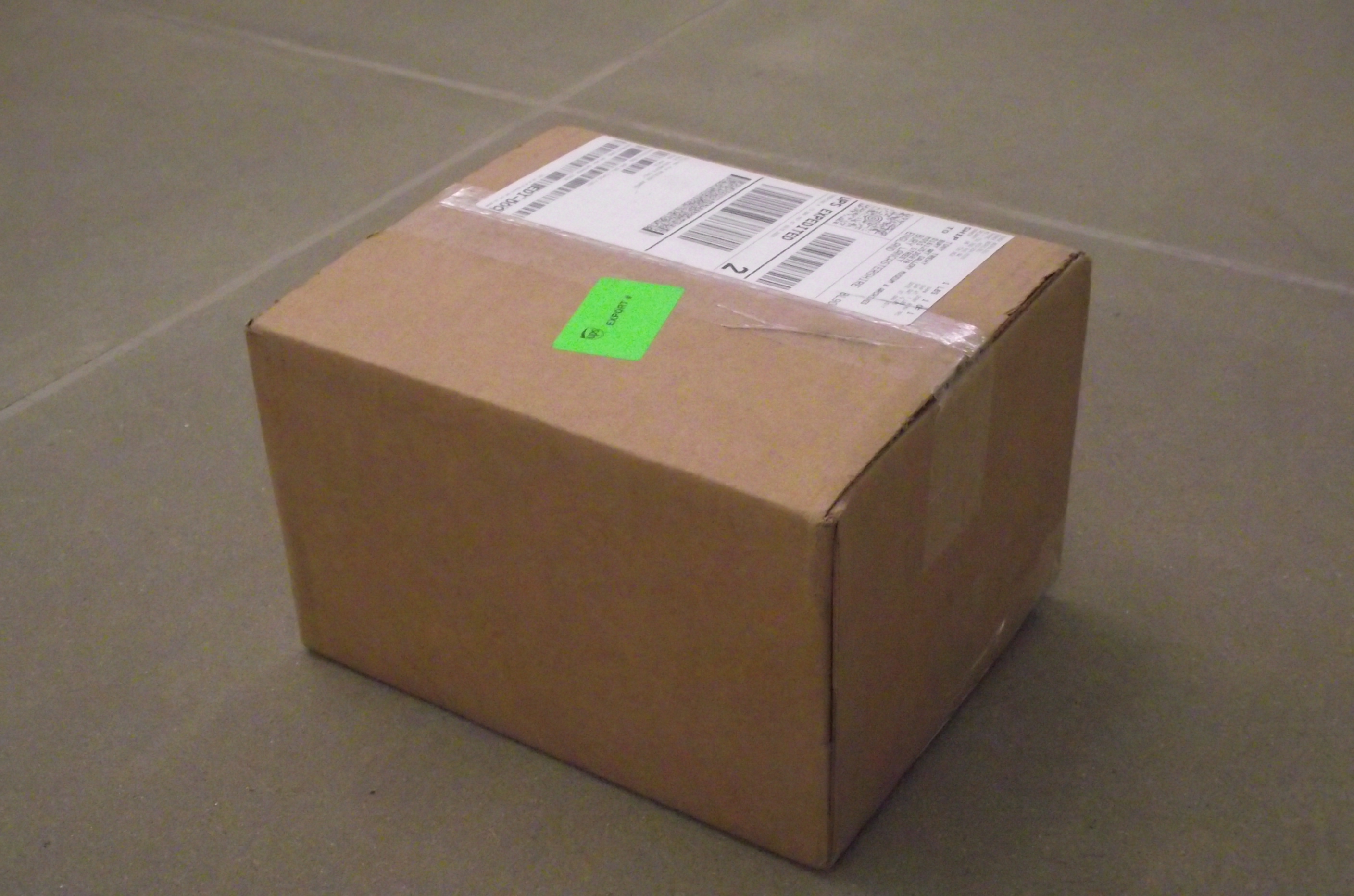





 derek beaulieu's blog