 Andrea Johnston has just published her “minimalist interview” with Micheline Maylor and myself at the Canadian Creative Writers and Writing Programs (CCWWP) blog
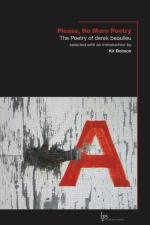 Frank Davey has reviewed Please, No More Poetry at London Open Mic Poetry Night.
“Please, No More Poetry is a crucial collection that not only looks back on a brilliant career, but looks toward the future of the medium itself…”:
Eric Schmaltz has reviewed Please, No More Poetry at Lemonhound.
“Flatland” was included as part of this month’s Pluss Pluss (Black Box Teater, Oslo, Norway); with thanks to Cecilie Bjørgås Jordheim and Signe Becker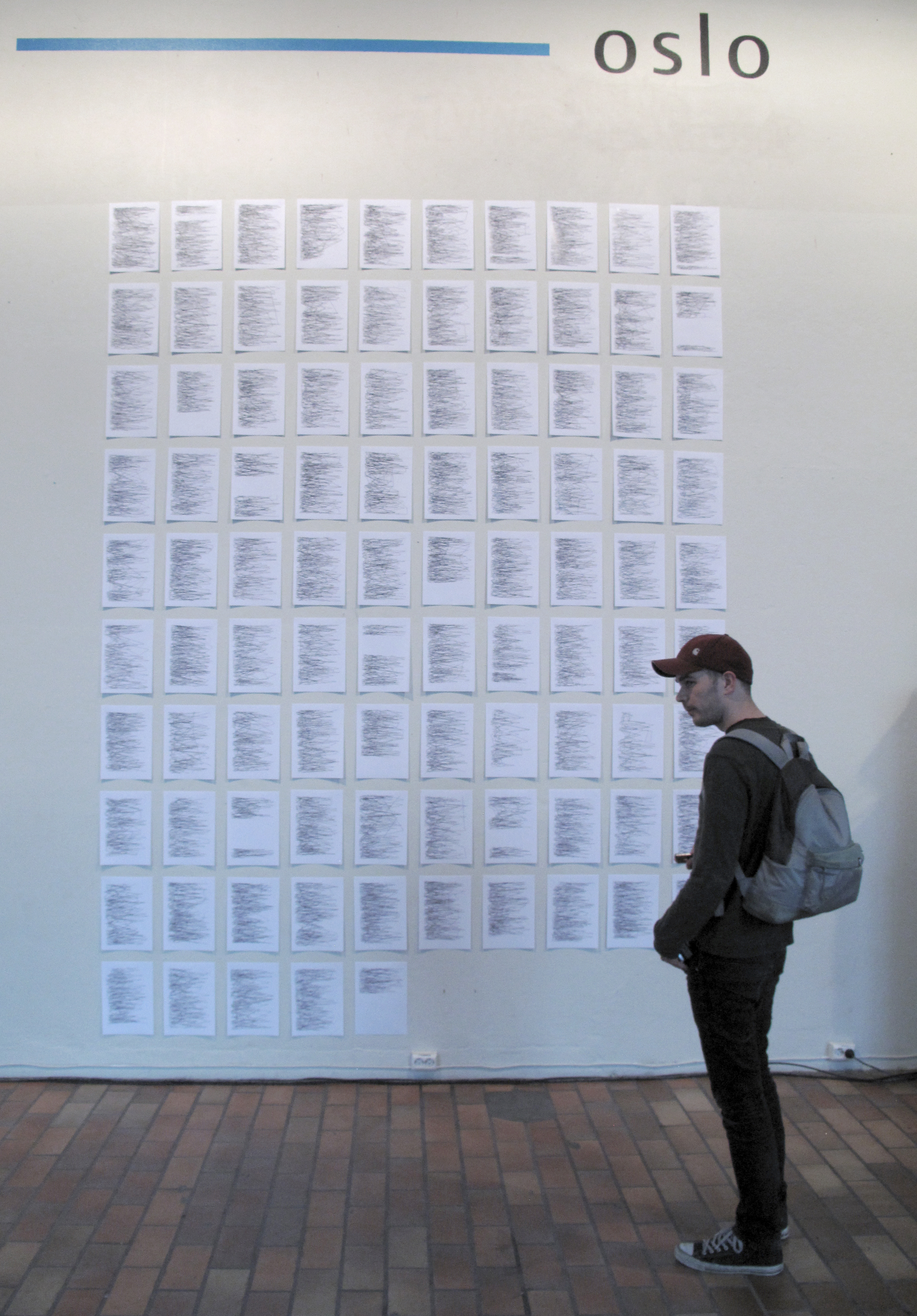


The folks at eBound recently interviewed the staff at Wilfrid Laurier University Press about digital publishing. Their discussion touched upon themes from Please, No More Poetry: the poetry of derek beaulieu. . .
Poetry and Digital Formats: An Interview with WLU Press
No PRESS is proud to announce the publication of
False Friends
A poetic engagement with Hungarian folk art, vocabulary and translation, False Friends is a delicate combination of full-colour visual poems and lyrical explorations of the false freinds of translation. Produced in a strictly limited edition of 50 handbound copies (only 23 of which are for sale) at $4 each – to order, email derek@housepress.ca
from False Friends:
 (Q)
(Q)
it may seem adequate,
like a sword piercing a shield
in some chivalric tale,
but dust off any old book
and when you look inside
all you’ll find is questions.
is it a treasure map?
did it ride in from france?
is it a spear that slipped
through the ribs of your language,
thousands of years ago,
or is it a thorn in your heel
that you only just noticed?
trade your old tomes
for other volumes
and hunch over the pages
like a medieval monk,
search for its provenance
like a modern scholar.
or trade your leather bound books
for paperbacks
and stop asking questions.
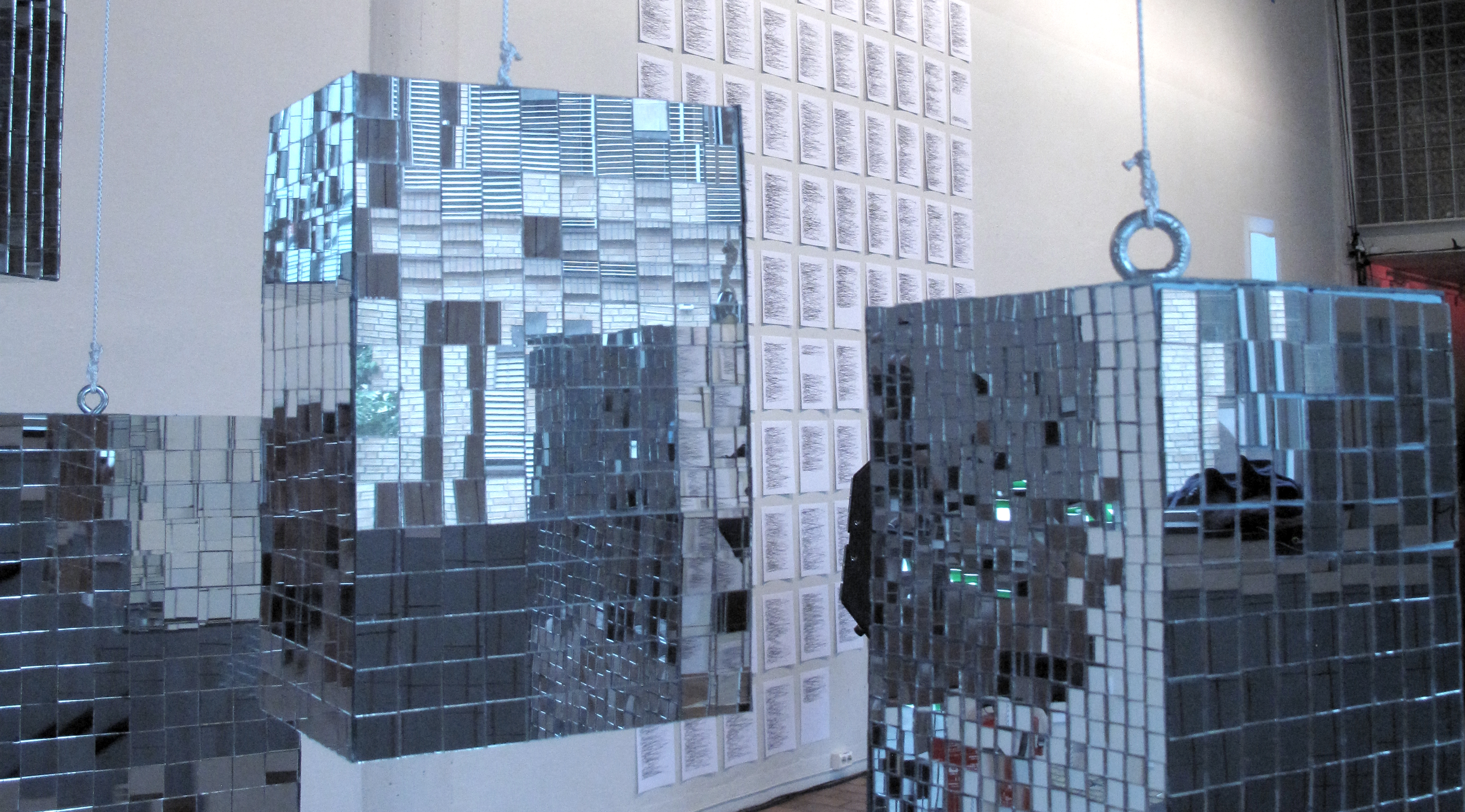
“Flatland” was included as part of this month’s Pluss Pluss (Black Box Teater, Oslo, Norway); with thanks to Cecilie Bjørgås Jordheim … here’s an installation picture before the festivities began (more to come)

Jonathan Ball has just written a capsule review of John Riddell’s Writing Surfaces (which Lori Emerson and I edited) online at the Winnipeg Free Press:
Calgary’s Derek Beaulieu and Colorado’s Lori Emerson have selected a variety of experimental fictions by John Riddell (that most resemble visual poems) in the collection Writing Surfaces (Wilfrid Laurier, 158 pages, $20).
The title is best reading as if “surfaces” were a verb, so that the book presents an implicit argument that writing “surfaces” despite the sense that Riddell is attempting to destroy the possibility of writing. One sequence literally finds Riddell feeding poems he has written into a shredder and presenting images of the unreadable, shredded text.
Riddell’s experiments remain radical, whereas much similar work from the period seems dated. Writing Surfaces thus recovers Riddell’s reputation while reframing his oeuvre in a contemporary context.
Mount Royal University student Andrea Johnston has just posted a brief article on the challenges of close-reading visual poetry at the Canadian Creative Writers and Writing Programs (CCWWP) blog. You can read “The Problem of Reading Visual Poetry” here.
 derek beaulieu's blog