Open Book Toronto takes an interest in what i’m reading…
No PRESS is proud to announce the publication of
False Friends
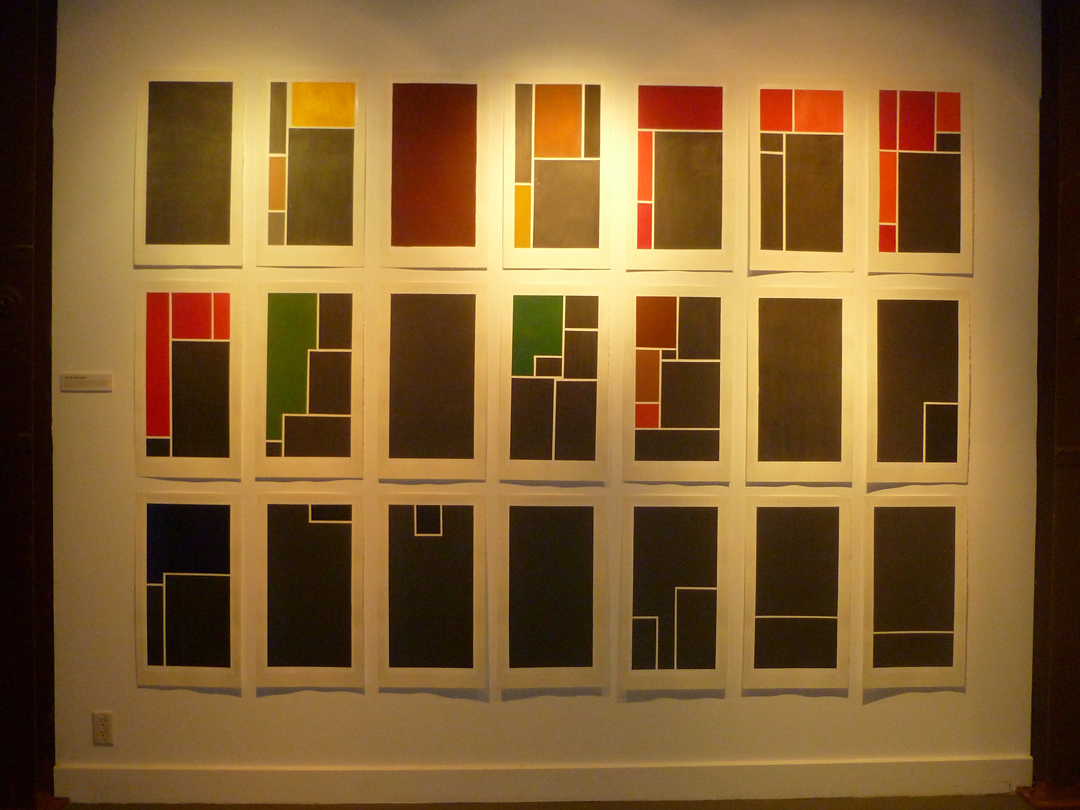
A poetic engagement with Hungarian folk art, vocabulary and translation, False Friends is a delicate combination of full-colour visual poems and lyrical explorations of the false freinds of translation. Produced in a strictly limited edition of 50 handbound copies (only 23 of which are for sale) at $4 each – to order, email derek@housepress.ca
from False Friends:
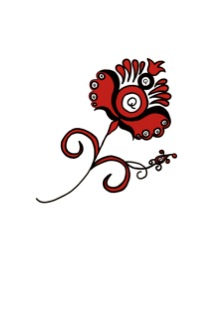 (Q)
(Q)
it may seem adequate,
like a sword piercing a shield
in some chivalric tale,
but dust off any old book
and when you look inside
all you’ll find is questions.
is it a treasure map?
did it ride in from france?
is it a spear that slipped
through the ribs of your language,
thousands of years ago,
or is it a thorn in your heel
that you only just noticed?
trade your old tomes
for other volumes
and hunch over the pages
like a medieval monk,
search for its provenance
like a modern scholar.
or trade your leather bound books
for paperbacks
and stop asking questions.
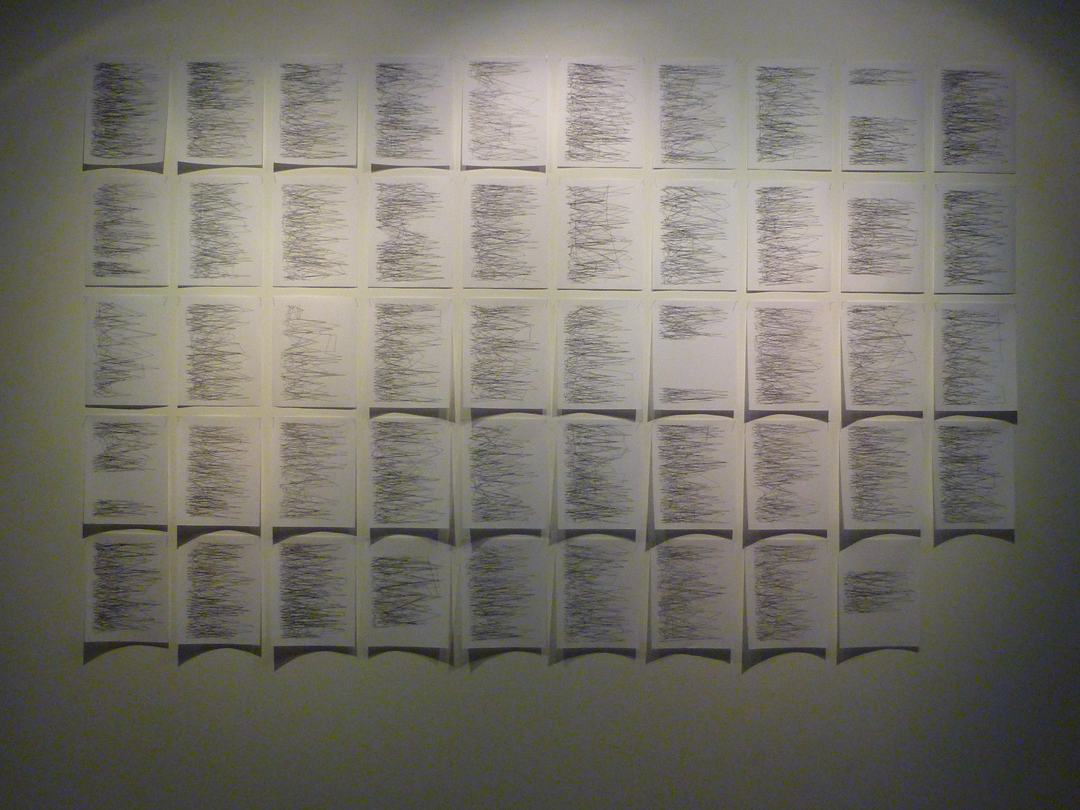
“Flatland” was included as part of this month’s Pluss Pluss (Black Box Teater, Oslo, Norway); with thanks to Cecilie Bjørgås Jordheim … here’s an installation picture before the festivities began (more to come)

Jonathan Ball has just written a capsule review of John Riddell’s Writing Surfaces (which Lori Emerson and I edited) online at the Winnipeg Free Press:
Calgary’s Derek Beaulieu and Colorado’s Lori Emerson have selected a variety of experimental fictions by John Riddell (that most resemble visual poems) in the collection Writing Surfaces (Wilfrid Laurier, 158 pages, $20).
The title is best reading as if “surfaces” were a verb, so that the book presents an implicit argument that writing “surfaces” despite the sense that Riddell is attempting to destroy the possibility of writing. One sequence literally finds Riddell feeding poems he has written into a shredder and presenting images of the unreadable, shredded text.
Riddell’s experiments remain radical, whereas much similar work from the period seems dated. Writing Surfaces thus recovers Riddell’s reputation while reframing his oeuvre in a contemporary context.
Mount Royal University student Andrea Johnston has just posted a brief article on the challenges of close-reading visual poetry at the Canadian Creative Writers and Writing Programs (CCWWP) blog. You can read “The Problem of Reading Visual Poetry” here.
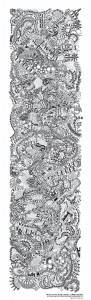 Gary Barwin has just posted an essay on my “Prose of the Trans-Canada” on Jacket2: “derek beaulieu’s Prose of the Trans-Canada is an epic inscribed scroll, a graphemic saga as Odyssean and graphic a roadtrip as traveling the eponymous Trans-Canada highway.“
thank you so very much to the student association of the Alberta College of Art + Design for this incredible Appreciation Award; i’m humbled and honoured.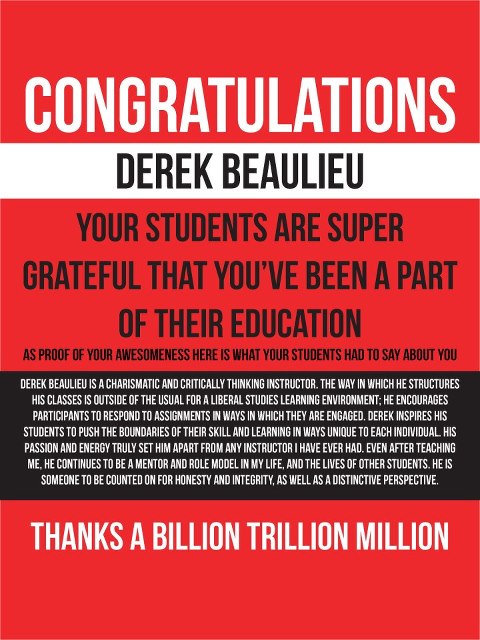
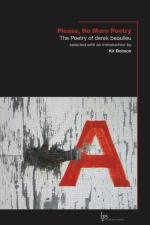
 On Friday April 12, 2013 at 7:00pm at Calgary’s Pages Books (1135 Kensington Rd NW) we will be celebrating the launch of Please, No more poetry: the poetry of derek beaulieu and Writing Surafces: selected fiction of john riddell (both from Wilfrid Laurier UP, 2013). Local writers Christian Bök, Richard Harrison, Natalie Simpson, Kathleen Brown, Karis Shearer and others will read /respond to / perform beaulieu’s works and good times will be had. Hosted by Kit Dobson, the editor of Please, No More Poetry.
More about Please, No more poetry: the poetry of derek beaulieu:
Since the beginning of his poetic career in the 1990s, derek beaulieu has created works that have challenged readers to understand in new ways the possibilities of poetry. With nine books currently to his credit, and many works appearing in chapbooks, broadsides, and magazines, beaulieu continues to push experimental poetry, both in Canada and internationally, in new directions. Please, No More Poetry is the first selected works of derek beaulieu.
As the publisher of first housepress and, more recently, No Press, beaulieu has continually highlighted the possibilities for experimental work in a variety of writing communities. His own work can be classified as visual poetry, as concrete poetry, as conceptual work, and beyond. His work is not to be read in any traditional sense, as it challenges the very idea of reading; rather, it may be understood as a practice that forces readers to reconsider what they think they know. As beaulieu continues to push himself in new directions, readers will appreciate the work that he has created to date, much of which has become unavailable in Canada.
With an introduction by Kit Dobson and an interview with derek beaulieu by Lori Emerson as an afterword, Please, No More Poetry offers readers an opportunity to gain access to a complex experimental poetic practice through thirty-five selected representative works.
More about Writing Surfaces: Selected Fiction of John Riddell:
John Riddell is best known for “H” and “Pope Leo, El ELoPE,” a pair of graphic fictions written in collaboration with, or dedicated to, bpNichol, but his work moves well beyond comic strips into a series of radical fictions. In Writing Surfaces, derek beaulieu and Lori Emerson present “Pope Leo, El ELoPE” and many other works in a collection that showcases Riddell’s remarkable mix of largely typewriter-based concrete poetry mixed with fiction and drawings.
Riddell’s work embraces game play, unreadability and illegibility, procedural work, non-representational narrative, photocopy degeneration, collage, handwritten texts, and gestural work. His self-aware and meta-textual short fiction challenges the limits of machine-based composition and his reception as a media-based poet.
Riddell’s oeuvre fell out of popular attention, but it has recently garnered interest among poets and critics engaged in media studies (especially studies of the typewriter) and experimental writing. As media studies increasingly turns to “media archaeology” and the reading and study of antiquated, analogue-based modes of composition (typified by the photocopier and the fax machine as well as the typewriter), Riddell is a perfect candidate for renewed appreciation and study by new generations of readers, authors, and scholars.