Archives for category: performances / readings

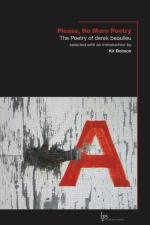
dobson-beaulieu beaulieu-emersonOn Friday April 12, 2013 at 7:00pm at Calgary’s Pages Books (1135 Kensington Rd NW) we will be celebrating the launch of Please, No more poetry: the poetry of derek beaulieu and Writing Surafces: selected fiction of john riddell (both from Wilfrid Laurier UP, 2013). Local writers Christian Bök, Richard Harrison, Natalie Simpson, Kathleen Brown, Karis Shearer and others will read /respond to / perform beaulieu’s works and good times will be had. Hosted by Kit Dobson, the editor of Please, No More Poetry.

More about Please, No more poetry: the poetry of derek beaulieu:

Since the beginning of his poetic career in the 1990s, derek beaulieu has created works that have challenged readers to understand in new ways the possibilities of poetry. With nine books currently to his credit, and many works appearing in chapbooks, broadsides, and magazines, beaulieu continues to push experimental poetry, both in Canada and internationally, in new directions. Please, No More Poetry is the first selected works of derek beaulieu.

As the publisher of first housepress and, more recently, No Press, beaulieu has continually highlighted the possibilities for experimental work in a variety of writing communities. His own work can be classified as visual poetry, as concrete poetry, as conceptual work, and beyond. His work is not to be read in any traditional sense, as it challenges the very idea of reading; rather, it may be understood as a practice that forces readers to reconsider what they think they know. As beaulieu continues to push himself in new directions, readers will appreciate the work that he has created to date, much of which has become unavailable in Canada.

With an introduction by Kit Dobson and an interview with derek beaulieu by Lori Emerson as an afterword, Please, No More Poetry offers readers an opportunity to gain access to a complex experimental poetic practice through thirty-five selected representative works.

More about Writing Surfaces: Selected Fiction of John Riddell:

John Riddell is best known for “H” and “Pope Leo, El ELoPE,” a pair of graphic fictions written in collaboration with, or dedicated to, bpNichol, but his work moves well beyond comic strips into a series of radical fictions. In Writing Surfaces, derek beaulieu and Lori Emerson present “Pope Leo, El ELoPE” and many other works in a collection that showcases Riddell’s remarkable mix of largely typewriter-based concrete poetry mixed with fiction and drawings.

Riddell’s work embraces game play, unreadability and illegibility, procedural work, non-representational narrative, photocopy degeneration, collage, handwritten texts, and gestural work. His self-aware and meta-textual short fiction challenges the limits of machine-based composition and his reception as a media-based poet.

Riddell’s oeuvre fell out of popular attention, but it has recently garnered interest among poets and critics engaged in media studies (especially studies of the typewriter) and experimental writing. As media studies increasingly turns to “media archaeology” and the reading and study of antiquated, analogue-based modes of composition (typified by the photocopier and the fax machine as well as the typewriter), Riddell is a perfect candidate for renewed appreciation and study by new generations of readers, authors, and scholars.
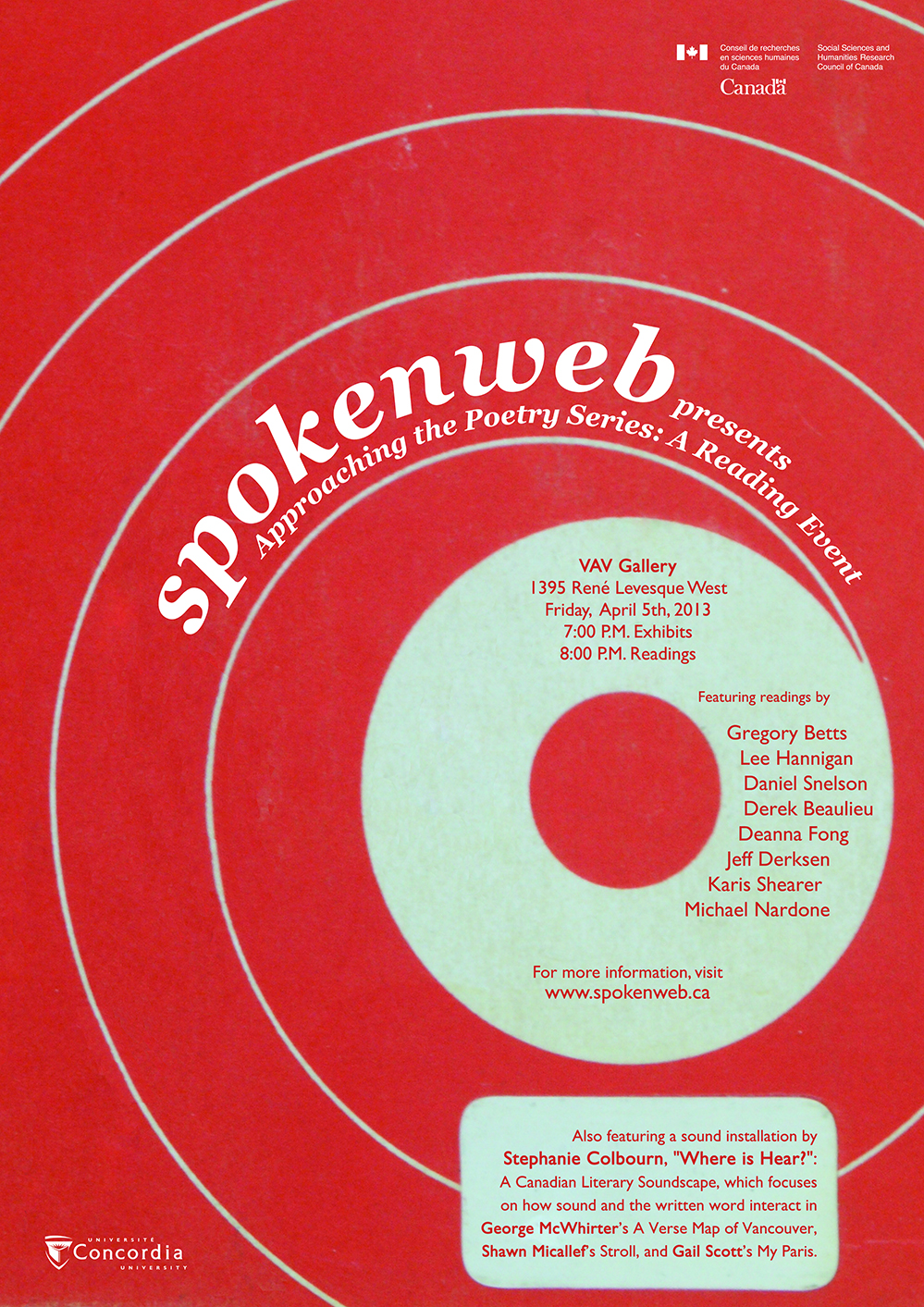
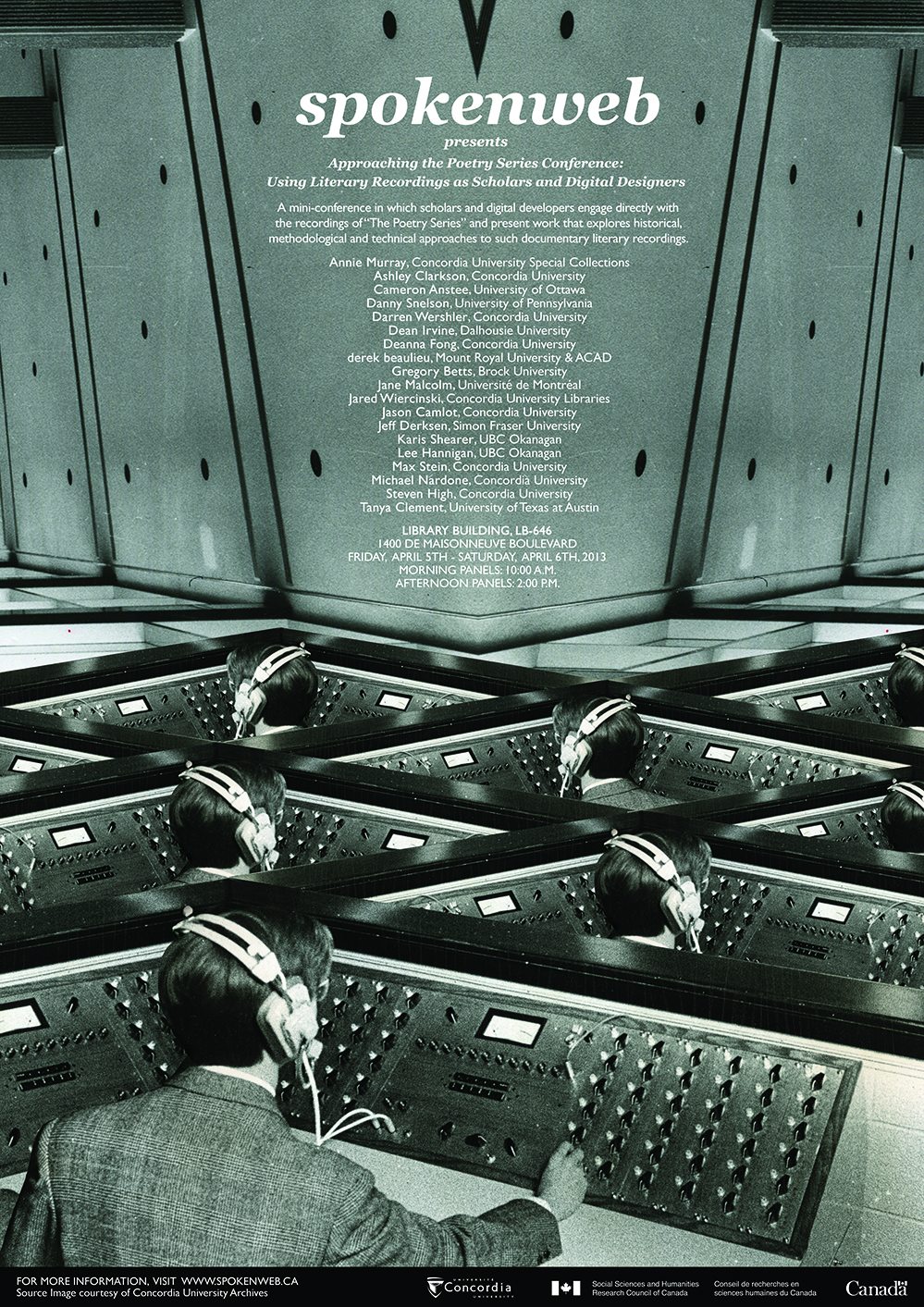
web_vav web_conference

October 12, 2012–February 3, 2013

Postscript: Writing After Conceptual Art features the work of over fifty artists and writers exploring the artistic possibilities of language. Presenting works from the 1960s to the present, the exhibition includes paintings, sculpture, installation, video and works on paper that raise questions about how we read, look at, hear, and process language today. A major current underlying the exhibition argues that the field of literature known as “conceptual writing” can be seen as engaging in a provocative dialogue with the field of contemporary art, producing new insights into the meaning of both literature and art. Co-curated by Nora Burnett Abrams and Andrea Andersson, Postscript is the first exhibition to examine the work of conceptual writing, investigating the roots of the movement in the art of the 1960s and 70s and presenting contemporary examples of text-based art practices.

Artists and writers featured in the exhibition include: Mark Amerika & Chad Mossholder, Carl Andre, Fiona Banner, Erica Baum, Derek Beaulieu, Caroline Bergvall, Jen Bervin, Jimbo Blachly & Lytle Shaw, Christian Bök, Marcel Broodthaers, Pavel Buchler, Luis Camnitzer, Ricardo Cuevas, Tim Davis & Robert Fitterman, Monica de la Torre, Craig Dworkin, Tim Etchells, Ryan Gander, Michelle Gay, Kenneth Goldsmith, Dan Graham, Alexandra Grant, James Hoff, Seth Kim-Cohen, Sol LeWitt, Glenn Ligon, Tan Lin, Gareth Long, Michael Maranda, Helen Mirra, Jonathan Monk, Simon Morris, João Onofre, Michalis Pichler, Paolo Piscitelli, Vanessa Place, Kristina Lee Podesva, Seth Price, Kay Rosen, Joe Scanlan, Dexter Sinister, Frances Stark, Joel Swanson, Nick Thurston, Triple Canopy, Andy Warhol, Darren Wershler, and Eric Zboya.

Jen Bervin and I read at Bowery Poetry Club April 21 4:00pm through the amazing Segue Poetry Series  (http://www.bowerypoetry.com/#Event/114164)

Help Celebrate the launch of 2 new books (and 1 slightly older book) from SNARE!

December 9th, 2011 7:30pm
Pages Books on Kensington
1135 Kensington Rd, NW

derek beaulieu, kevin mcpherson eckhoff and Jake Kennedy will be reading from their new Snare books at what promises to be a fun event hosted by the awesome Sandy Pool.

Come! Chat! Listen! Buy Books!

about the books:

DEREK BEAULIEU’S SEEN OF THE CRIME:
In a series of statements, essays, missives and informal discussions, seen of the crime surveys the radical edges of Canadian and international poetry; the conceptual and the concrete, the political and the playful. With seen of the crime, derek beaulieu explores the flourishing and frustrating alternatives: the poetry without subjectivity, without narrative, without words, and even without letters.

KEVIN MCPHERSON ECKHOFF’S EASY PEASY:
Easy Peasy assumes nothing, but ass you me severything! Part instruction manual for the comfortably literate, part picture book for the uncommitted spectator, these poems insist upon the simple beautiful error of words and the imaginative potential of miscommunion! If you enjoy spending time outdoors, eating chocolate bars, watching movies, drinking tea with friends, avoiding death, taking baths and understanding the world, then this book most definitely is not for your!

JAKE KENNEDY’S THE LATERAL:
Winner of the 2010 Robert Kroetsch Award for Innovative Poetry! The Lateral is a highly original and experimental book from a nimble poetic mind. It includes an elegiac found-long-poem that gathers all the “Acker” keyword tags from the Flickr database and reapplies them as words-of-lament for the revolutionary artist-writer Kathy Acker (1947-97), a series of prose-poem-ruminations that contemplate the optimal conditions for the poetry, and a section of poems that can only be described as the vulgar, unkempt cousin of Hugh Prather’s Notes to Myself.

I’m thrilled to announce that Wordfest 2011 is augmenting my appearance at the festival in support of Seen of the Crime by projecting Prose of the Trans-Canada on the side of the Calgary Tower for the duration of the festival:

derek beaulieu’s work is consistently praised as some of the most radical and challenging contemporary Canadian writing. A towering moment in beaulieu’s on-going exploration of letraset as a medium for concrete poetry, Prose of the Trans-Canada, will be on display, after dark, as an “illuminated light sculpture” on the façade of the Calgary Tower from October 11–14. Rising over 20 metres, the visual poem will illuminate the Calgary Tower and provide a new platform for this cutting-edge artist.

Four videos of my performance May 29, 2011 in Calgary’s Riley Park as part of the filling Station / Pooka Press Pub Crawl (as recorded by Helen Hajnoczky):

creation of Text festival Commission, April 2011 (photograph by Phil Davenport)

creation of Text festival Commission, April 2011 (photograph by Phil Davenport)

Having returned to Canada from the Text Festival in Bury, UK, I have a few new photographs of the creation of my piece (with Festival Curator Tony Trehy in the background). Courtesy of Phil Davenport, these photographs document the creation of my vinyl-letter and letraset-based visual poem on the glass doors of Bury’s Fusilier Museum.

“Clearly we are beginning to get nowhere.”
—John Cage

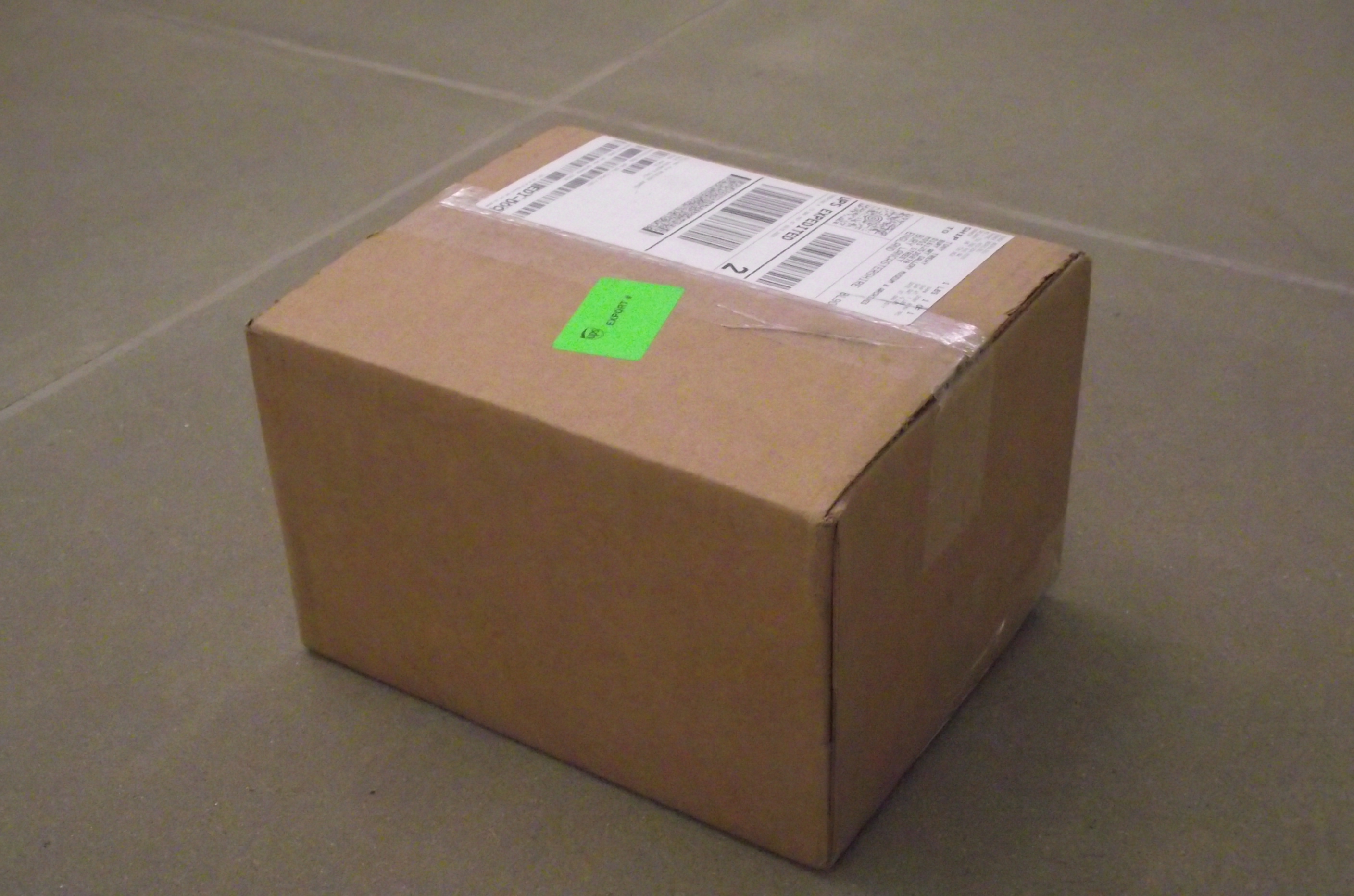
On April 7, 2011 I sent The Bury Museum and Archives an empty box.

I purchased the box for $3.95 (£2.50) and received skeptical looks from the UPS employees when I requested to send the box—devoid of any content—to Bury.

UPS also instructed me that they would not ship an “empty box” and that they needed the contents of the box to fit within one of their predetermined categories. We agreed to enclose within the box a single sheet of blank A4 paper. With this content—as unwritten as it was—UPS could now categorize the contents of the box as “documents” and could continue to process the application for transportation.

Their consternation was compounded with my request to insure the box and its contents to a value of £25,000; the same amount as the yearly wage of an arts worker in the UK (before the current government’s arts funding cutbacks).

UPS, not unexpectedly, refused to insure the parcel for more than $2,500 (£1,500). They would not guarantee the safety of a box of “nothing” and refused to insure the safety of “artwork” (even an empty box) as it was shipped to the UK. For insurance of the amount I requested would have to seek a rider for an independent insurance provider.

I was then asked to complete a Parcel Shipping Order form that included check-boxes which inquired “Are the contents of the parcel breakable?” (Yes) and “Are the contents of the Parcel replaceable?” (No)

Upon my completion of the form, I was invoiced a shipping cost of $135.90 (£86.23) and the box was assigned a tracking number and a series of bar-codes and QR Codes to expedite the box of nothing as it cleared various processing centres and Canadian and British Customs.

These bar-codes and QR Codes are included in The Bury Museum and Archives’ exhibition The History of Tradestamps.

Tradestamps were the cotton industry’s hand printed labels used to indicate the contents of their shipping bundles in order to appeal to their (often illiterate) purchasers. The tradestamps “often depicted scenes, emblems, animals or figures” and the industry “employed hundreds of designers to create these trade marks as an early form of branding.”

The resultant bar-code is the symbol of nothing. In light of the current administration’s draconian cutbacks and their lack of willingness to insure the growth of social programs and the arts, to quote John Cage, “Nothing more than nothing may be said.”

I’ll be reading at the University of Lethbridge this coming Friday:

April 8, 2011 1pm

W561 (Fine Arts Building)

as part of Dr. Jay Gamble’s “Experimental Poetry” Seminar.

The reading is free and open to the public.