Archives for category: conceptual writing

LCLOCAL COLOUR; GHOSTS, VARIATIONS

Ola Ståhl, Carl Lindh & Derek Beaulieu
Malmö: Publication Studio Malmö / In Edit Mode Press, 2012
ISBN: 978-91-977853-4-1
Set including a series of perfect bound, paperback volumes, a book of photographs, a CD and a piece of software. First edition: 200 copies.
Release date: Dec 20, 2012
Retail price: €58

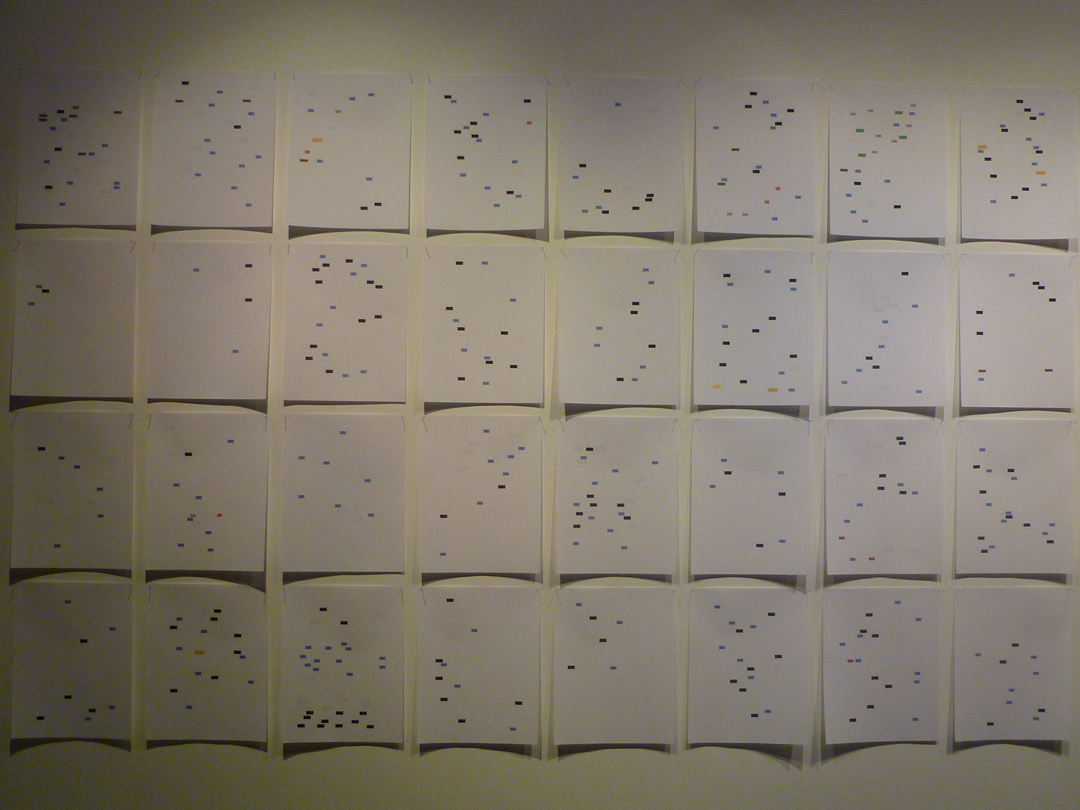
“Local Colour; ghosts, variations” takes as its point of departure, Paul Auster’s novella “Ghosts,” and, in particular, Derek Beaulieu’s reworking of Auster’s text, “Local Colour,” in which the entirety of Auster’s text has been removed, leaving only the chromatic words spread across the otherwise blank pages as coloured rectangles. “Local Colour; Ghosts, variations” picks up on the way in which Beaulieu’s piece seems to split Auster’s narrative text open by rendering it purely graphical, freeing it up, by the same gesture, to an excess and a bifurcation of meaning. Seeking to extend and amplify this ambition, the collection invites other writers, poets, musicians, and artists to implement procedures and process that allow them to do Beaulieu what Beaulieu did to Auster; that is, to split his colour rectangles open and see can be done with what is revealed. Contributors include Derek Beaulieu, Steve Giasson, Cia Rinne, Peder Alexis Olsson, Jörgen Gassilewski, Craig Dworkin, Elisabeth Tonnard, Martin Glaz Serup, Eric Zboya, Ola Ståhl, Pär Thörn, Carl Lindh, Cecilie Bjørgås Jordheim, Ola Lindefelt, Andreas Kurtsson, Helen White, Gary Barwin, Magda Tyzlik-Carver and Andy Prior.

LC-posterCOLOUR’S GRAVITY

Ola Ståhl
Malmö: Publication Studio Malmö / In Edit Mode Press, 2013
No ISBN
First edition: 200 copies
Release date: Dec 2, 2012
Retail price: €7

Double-sided poster by Ola Ståhl presenting all the colours rectangles in Derek Beaulieu’s graphical reworking of Paul Auster’s novella “Ghosts” in the order in which they appear but printed as long, slim strips on glossy paper. On one side of the poster, the nuances are those that appear in Beaulieu’s manuscript. For the opposite side of the poster, however, a cipher, the key to which was found in an hollowed out coin in Brooklyn in the 1950s, was used to create an alternate set of numeric sequences from the CMYK numbers of the colours used in Beaulieu’s piece. From these numeric sequences a different set of CMYK numbers, and thus a different set of colours, was generated. Treated the same way as the original colour series, these are the colours presented on the other side of the poster.

LC-speldosaAPPARITION

Carl Lindh & Ola Ståhl
Malmö: Publication Studio Malmö / In Edit Mode Press, 2013
No ISBN
Music box and scroll. Limited and numbered edition of 10 copies.
Release date: Dec 2, 2012
Retail price: €115

Replicating Derek Beaulieu’s “Local Colour” – a graphical reworking of Paul Auster’s novella “Ghosts” – as a scroll and cutting out each coloured rectangle, leaving only a series of tiny perforations, Ola Ståhl & Carl Lindh’s “Apparition” extends the translation process initiated in Beaulieu’s rendering graphical of Auster’s text, only here the graphical manuscript is translated into a sequence of absences – holes, punctures – reemerging spectrally as sound as the scroll is fed through the music box. Each numbered copy is fully functional and contains both music box and scroll.
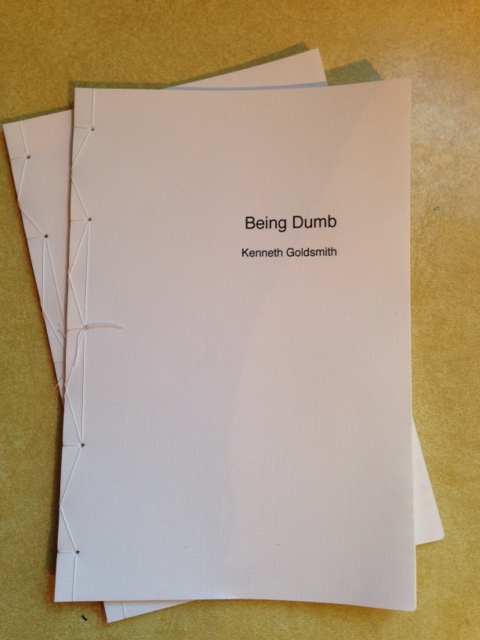
photoNo Press is proud to announce the publication of Kenneth Goldsmith’s BEING DUMB

Produced in a limited edition of 60 hand-bound copies.

From BEING DUMB:

“I am a dumb writer, perhaps one of the dumbest that’s ever lived. Whenever I have an idea, I question myself whether it is sufficiently dumb. I ask myself, is it possible that this, in any way, could be considered smart? If the answer is no, I proceed. I don’t write anything new or original. I copy pre-existing texts and move information from one place to another. A child could do what I do, but wouldn’t dare to for fear of being called stupid.”

Originally published online at The Awl, BEING DUMB is now available for $7ea.

To order please email derek beaulieu

photo 4

“The Newspaper” by derek beaulieu (photo courtesy Eric Schmaltz)

photo 3

“The Newspaper” by derek beaulieu (photo courtesy Eric Schmaltz)

photo 2

“Protein 13” (detail) by Christian Bok (photo courtesy Eric Schmaltz)

photo 1

“Solilioquy” (detail) by Kenneth Goldsmith (photo courtesy Eric Schmaltz)

Postscript: Writing after Conceptual Art” has opened at Toronto’s Power Plant Gallery — here are a few early pictures from the opening (courtesy Eric Schmaltz)


dobson-beaulieuFrank Davey has reviewed Please, No More Poetry at London Open Mic Poetry Night.

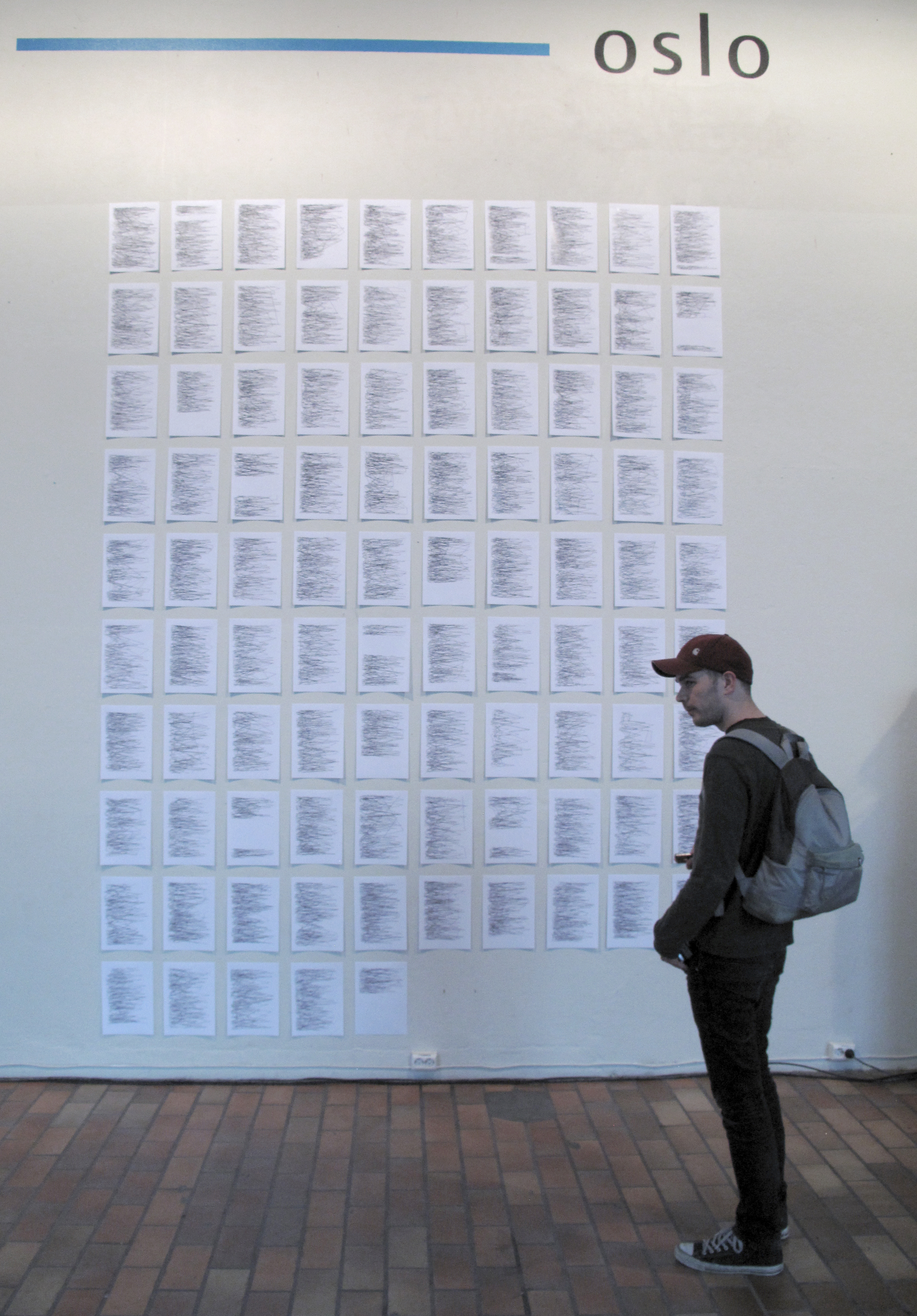
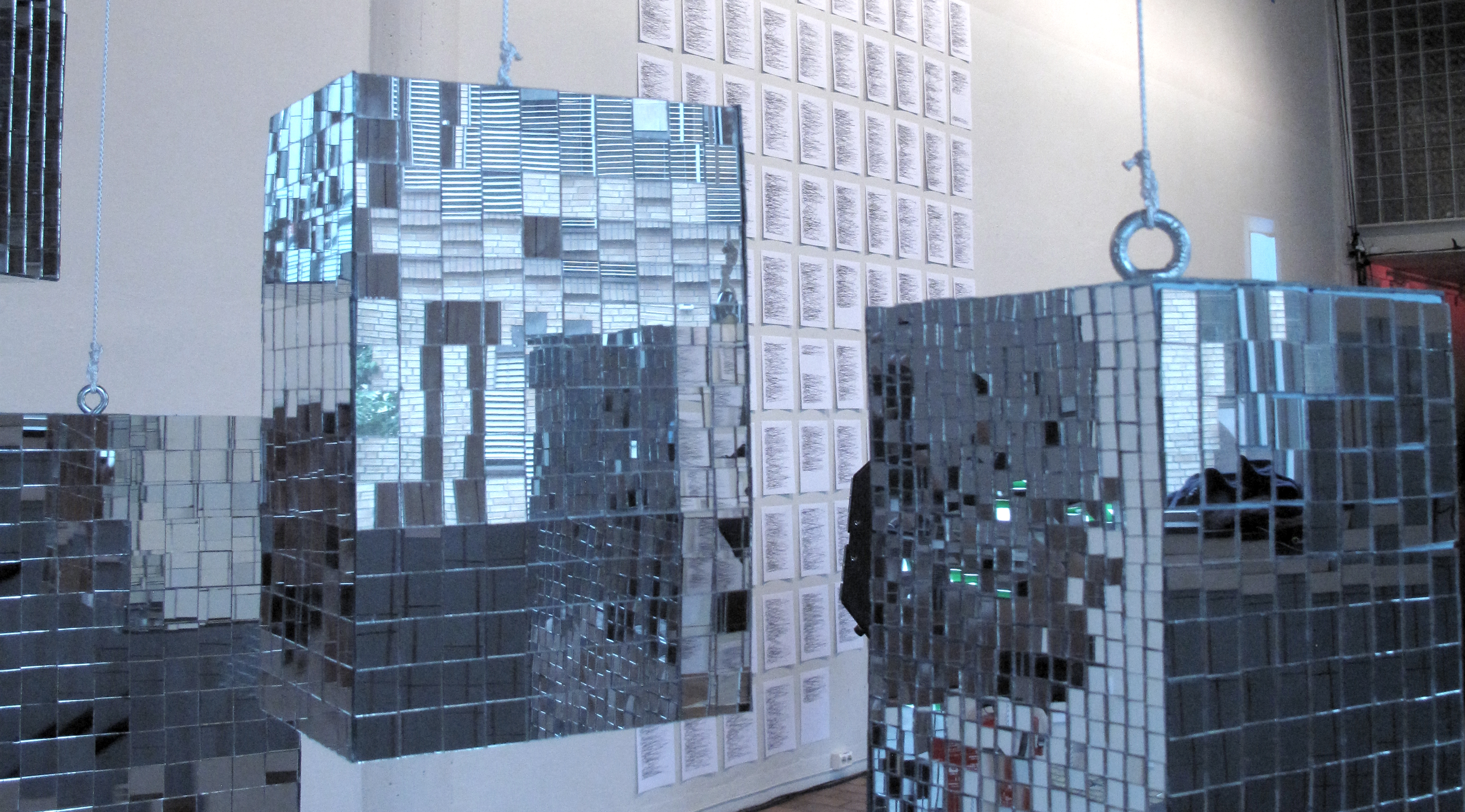
“Flatland” was included as part of this month’s Pluss Pluss (Black Box Teater, Oslo, Norway); with thanks to Cecilie Bjørgås Jordheim and Signe Beckerderek2 derek+lys dereks derek4


“Flatland” was included as part of this month’s Pluss Pluss (Black Box Teater, Oslo, Norway); with thanks to Cecilie Bjørgås Jordheim … here’s an installation picture before the festivities began (more to come)

dobson-beaulieu beaulieu-emersonOn Friday April 12, 2013 at 7:00pm at Calgary’s Pages Books (1135 Kensington Rd NW) we will be celebrating the launch of Please, No more poetry: the poetry of derek beaulieu and Writing Surafces: selected fiction of john riddell (both from Wilfrid Laurier UP, 2013). Local writers Christian Bök, Richard Harrison, Natalie Simpson, Kathleen Brown, Karis Shearer and others will read /respond to / perform beaulieu’s works and good times will be had. Hosted by Kit Dobson, the editor of Please, No More Poetry.

More about Please, No more poetry: the poetry of derek beaulieu:

Since the beginning of his poetic career in the 1990s, derek beaulieu has created works that have challenged readers to understand in new ways the possibilities of poetry. With nine books currently to his credit, and many works appearing in chapbooks, broadsides, and magazines, beaulieu continues to push experimental poetry, both in Canada and internationally, in new directions. Please, No More Poetry is the first selected works of derek beaulieu.

As the publisher of first housepress and, more recently, No Press, beaulieu has continually highlighted the possibilities for experimental work in a variety of writing communities. His own work can be classified as visual poetry, as concrete poetry, as conceptual work, and beyond. His work is not to be read in any traditional sense, as it challenges the very idea of reading; rather, it may be understood as a practice that forces readers to reconsider what they think they know. As beaulieu continues to push himself in new directions, readers will appreciate the work that he has created to date, much of which has become unavailable in Canada.

With an introduction by Kit Dobson and an interview with derek beaulieu by Lori Emerson as an afterword, Please, No More Poetry offers readers an opportunity to gain access to a complex experimental poetic practice through thirty-five selected representative works.

More about Writing Surfaces: Selected Fiction of John Riddell:

John Riddell is best known for “H” and “Pope Leo, El ELoPE,” a pair of graphic fictions written in collaboration with, or dedicated to, bpNichol, but his work moves well beyond comic strips into a series of radical fictions. In Writing Surfaces, derek beaulieu and Lori Emerson present “Pope Leo, El ELoPE” and many other works in a collection that showcases Riddell’s remarkable mix of largely typewriter-based concrete poetry mixed with fiction and drawings.

Riddell’s work embraces game play, unreadability and illegibility, procedural work, non-representational narrative, photocopy degeneration, collage, handwritten texts, and gestural work. His self-aware and meta-textual short fiction challenges the limits of machine-based composition and his reception as a media-based poet.

Riddell’s oeuvre fell out of popular attention, but it has recently garnered interest among poets and critics engaged in media studies (especially studies of the typewriter) and experimental writing. As media studies increasingly turns to “media archaeology” and the reading and study of antiquated, analogue-based modes of composition (typified by the photocopier and the fax machine as well as the typewriter), Riddell is a perfect candidate for renewed appreciation and study by new generations of readers, authors, and scholars.

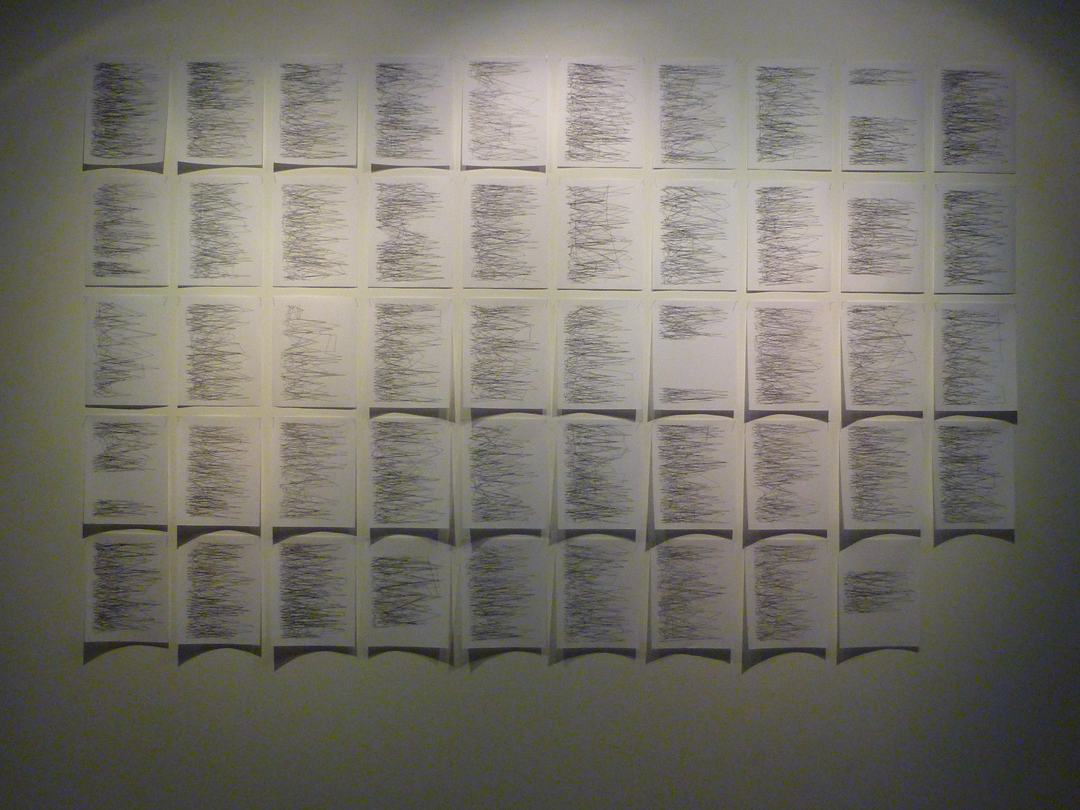
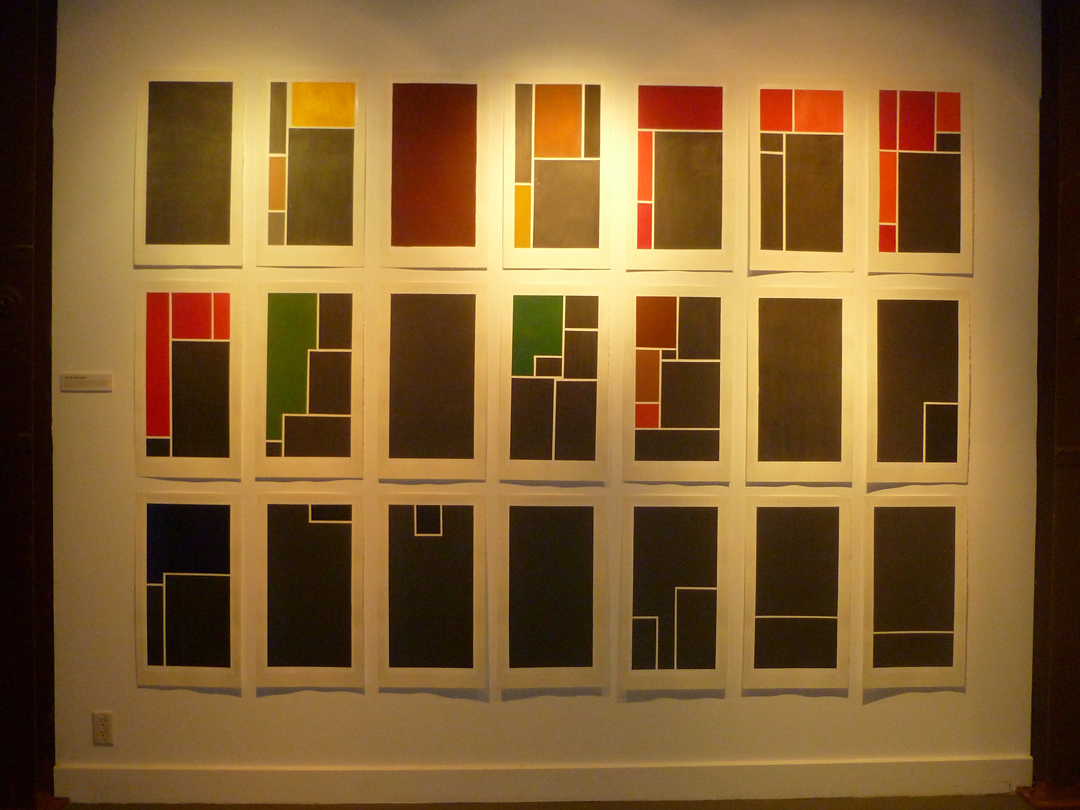
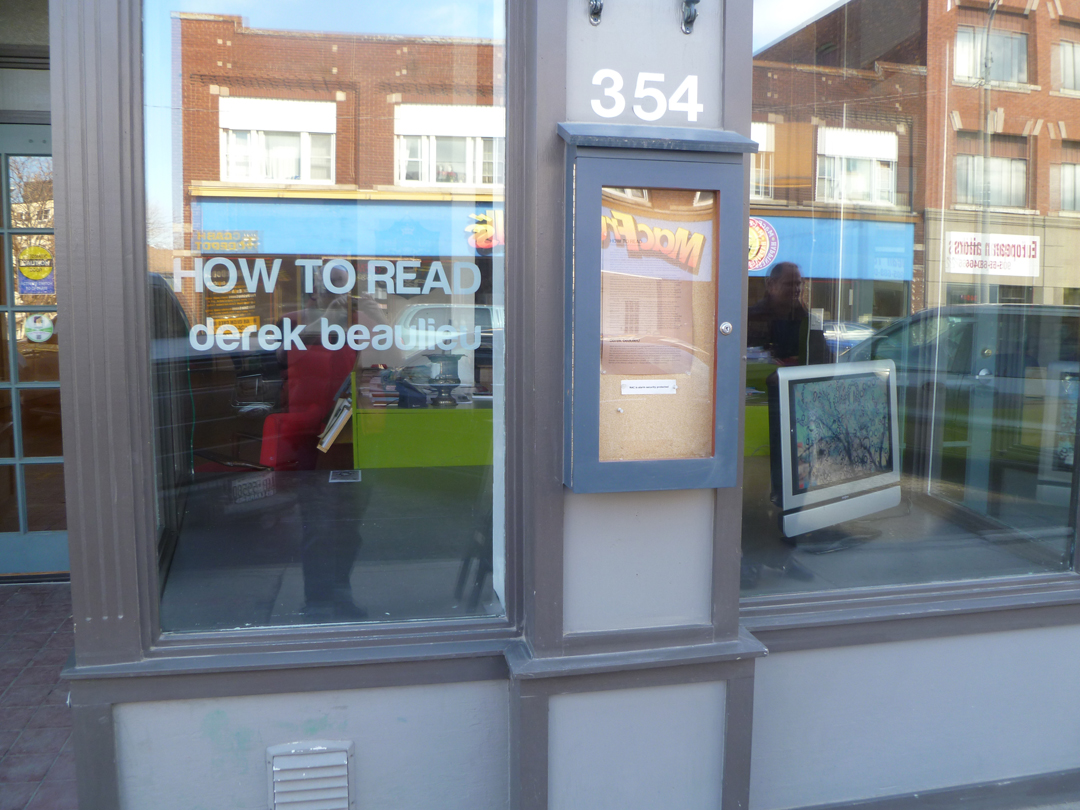
How Read - gallery view How Read - gallery view How Read - Flatland How Read - Flatland How Read - The Newspaper How Read - The Newspaper How Read - Local ColourHow Read - Niagara Arts Centre How Read - Untitled How Read - The Alphabet

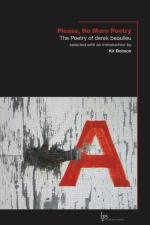
dobson-beaulieuPlease, no more poetry: the poetry of derek beaulieu

Edited by Kit Dobson.

Waterloo: Wilfrid Laurier University Press, 2013.

available for order here or from your local independent bookstore.

Since the beginning of his poetic career in the 1990s, derek beaulieu has created works that have challenged readers to understand in new ways the possibilities of poetry. With nine books currently to his credit, and many works appearing in chapbooks, broadsides, and magazines, beaulieu continues to push experimental poetry, both in Canada and internationally, in new directions. Please, No More Poetry is the first selected works of derek beaulieu.

As the publisher of first housepress and, more recently, No Press, beaulieu has continually highlighted the possibilities for experimental work in a variety of writing communities. His own work can be classified as visual poetry, as concrete poetry, as conceptual work, and beyond. His work is not to be read in any traditional sense, as it challenges the very idea of reading; rather, it may be understood as a practice that forces readers to reconsider what they think they know. As beaulieu continues to push himself in new directions, readers will appreciate the work that he has created to date, much of which has become unavailable in Canada.

With an introduction by Kit Dobson and an interview with derek beaulieu by Lori Emerson as an afterword, Please, No More Poetry offers readers an opportunity to gain access to a complex experimental poetic practice through thirty-five selected representative works.

New Orleans’ József Makkos is publishing a new small press edition of excerpts from my conceptual novel Flatland.

The edition will be a tactile treat and will feature letterpress covers printed on 50-year-old laid Strathmore bond (a type of which hasn’t been made for 20 years), off-white felt finis flyleaves and interior pages on english bond …

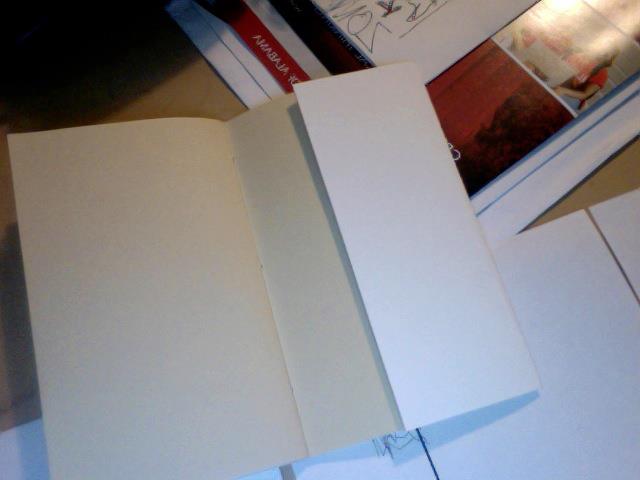
a few preview photos of the prototype for this forthcoming edition:

flatland 2 flatland 1