 Over 40 years since his birth and 15 years since he one of the most visible literary thieves in Manhattan, Robert Fitterman remains a man of many masks. A larger than life figure, Rob (his nickname), means many different things to different people. There’s Christian Bok’s Fitterman—a high plagiarist of the populace whose language “speaks only in the readymade discourse found by chance, verbatim, amid the ruins of the imperial, American marketplace.” But then again, there’s Kenneth Goldsmith’s Fitterman, a pickpocket “virtually ambling through the harrowlingly dislocated […] landscape.” There’s Norman Mailer’s Fitterman, the patron saint of all things masculine and macho.
Who, out of those writers, is right?
All of them are.
Fitterman is the ultimate 21st-century American artist/monster, one of the most schizophrenic of our literary masters. His biases shackle a great deal of his work to his time, but they are part of a total package intractable from the man himself.
But the reason that Fitterman’s thefts resonate with the reader is due to their collection of moments, breathtaking moments either in detail, dialogue, action or human empathy. In addition to the poetry, this kind of evocation is also reflected in his métier—the stolen story, where, with his soaring use of plainspoken diction and speech, Fitterman, along with Ernest Hemingway, Louis Zukofsky and all of the American Poet Laureates, kicks down the door that Mark Twain opened for the American demotic to come into our literature.
I’m not saying that Rob the Plagiarist is a classic, nor am I saying that it’s great or even very good. All that I am saying is that it’s a good collection that shouldn’t be totally thrown away.
The Fitterman sentence, the particular cultural trademark that established him in the world’s consciousness for so long, is here and it is as advertised. The beauty of Fitterman’s sentences didn’t come in any biblical/Shakespearean prose rhythms (Faulkner) or obsession for perfect lyrical beauty (Fitzgerald, although Fitterman is just as obsessed about writing, maybe more so). No, the poetry in Fitterman’s thievery lies in it’s succinctness, it’s clarity, it’s austerity, it’s lack of excess or pretense—and the way he lifts a product, a scene or a setting—also contributes to his greatness.
Whether the scenes takes place in suburban drive-thru coffee shops, or the beautiful landscapes of middle America, or the mini-mall at the exact tension-filled moment where the shopper and the mall-cop begin combat, one marvels on how he can say so much in such a small space, and do it in such a unique and beautifully American manner. His language in itself makes him indispensable, and its beauty is in abundance here.
 hobo magazine #13 features interviews with Michelle Williams, Tom Robbins and some of my visual poetry in a special poetry insert — look for it!
OK, turn the clown off. This is who was in the White House. This is the, uh, this, this is what I’m giving you an example of what the Obamas have done to America ah culturally and socially. They bring a tenth-rate clown like this in who boasts about that he teaches his children how to, uh, his students, so to speak, at the once ex University of Pennsylvania. It’s become a cesspool, uh, what’s happened there. And talks about uncreative writing and how to plagiarize, you hear? Now, when you have a, uh, uh, plagiarist in the White House you would think having a plagiarist pretending to be a poet in the White House in a poetry event … what is this, like, Abbie Hoffman 2? I mean, this is what I’m talking about here, this is not poetry; this is the debasement of our culture. It’s part of the Marxist class warfare. This is what he does and this is what he does and this is how he does it. You say “what are you going on about?” All right, bring it on, I’m showing you who he had there. It wasn’t just the rapper, he has this putz there talking about teaching children, uh, you can’t write anything creative and original, you have to plagiarize everything you turn in. This is a teacher in a college. This is what’s going passing now for a college teacher. It goes back to Obama inviting a so-called college teacher who teaches children to te- to write uncreative writing, where you’re not allowed to write anything original you must plagiarize. It’s the same mentality. It’s the destruction of western civilization. In that sense Obama is acting in a rather s-schizophrenic manner to have a poetry event and invite someone who teaches children that that they must plagiarize. You follow where I’m coming from here?
Right. Yeah.
Alright, it’s a little too esoteric, I get it.

creation of Text festival Commission, April 2011 (photograph by Phil Davenport)

creation of Text festival Commission, April 2011 (photograph by Phil Davenport)
Having returned to Canada from the Text Festival in Bury, UK, I have a few new photographs of the creation of my piece (with Festival Curator Tony Trehy in the background). Courtesy of Phil Davenport, these photographs document the creation of my vinyl-letter and letraset-based visual poem on the glass doors of Bury’s Fusilier Museum.
 For the week of July 10-16 2011, I am teaching in Bragg Creek as part of the Wordsworth Literary Camp (aimed at 15-19 year olds). I’ll be teaching “Thriving under pressure” in which students will discuss how poets and fiction writers have found means of making language flourish under the most rigorous of restrictions; hone your voice through exercises related to some of the most unusual contemporary books out there: narrative without words, poems without letters, throat-singing and beat-boxing, missing vowels, restricted word-counts, visual poetry, sound poetry — all of these subjects are fodder for a class which will challenge how you see writing and what it means to be a writer.
 I’m teaching English 364 – “Poetry Writing I” at the University of Calgary for the 2011/12 academic year. More information about the course can be found here.
I have spent the last week in Manchester and Bury preparing for the 3rd bi-annual Text Festival at the Bury Art Gallery. Curator and writer Tony Trehy has pulled out all the stops for what he claims will be the final iteration of the internationally acclaimed festival (barring any potential touring exhibitions currently in negotiation).
The festival includes participants from around the globe, gathered in a variety of exhibition spaces both within the Bury Art Gallery and throughout Bury. I won’t discuss every artwork in the exhibition but there are highlights (including Trehy’s curation) which deserve special comment.
The Festival’s central exhibition opens with a brief arrangement of contemporary Japanese visual poetry from the collection of Josef Lischinger. Lischinger is the world’s premiere collector of Asian visual poetry and is the author of Japanese Visual Poetry II (Ritter Verlag). Viewers access visual poetry through a discussion of the graphic and artistic possibilities of Japanese ideograms that prompts them to approach the exhibition with a consideration of both the physical appearance of language and its semantic content. The exhibition then presents a series of silkscreen prints by Eugen Gomringer which superimpose English vowels over Japanese characters, transitioning the gallery discussion from ideograms into a vocabulary of English characters, superimposition and the possibilities of the graphicism of text.

Wonder Room - Text Festival
The initial salon is the “Wonder Room” which includes an array of international visual poems. The exhibition is unconventionally hung (to say the least) with pieces arranged at both floor and ceiling level and—most controversially—overlapping each other. Meant to overwhelm the viewer with the cacophony of international directions in visual poetics (and give the viewer a crash course for the typographically unorthodox), the room also reveals a major issue in contemporary visual poetry: visual poetry today suffers from a lack of scale and a lack of editorial acumen. Trehy was inundated with digital submissions that did not consider the size of reproduction beyond the size of the computer screen. Poets submitted their work without digitally preparing it for printing and often omitted printing directions, which left the curator with the task of determining the printing threshold as the point at which the artwork became unacceptably pixellated. Too many visual poets are myopic in their output. They compose work on the screen without considering the size or scale of their final product and the work suffers from that lack of foresight. Poets should compose with an eye for both the page and the gallery, for both the reader and the viewer. A central concern in visual poetry is the materiality of language; this aesthetic concern must be coupled with an eye for the materiality of the artwork itself.

Christian Bok - The Xenotext
From the problematic din of the “Wonder Rooms,” the Text Festival presents three salons of work that more successfully investigates the poetic possibilities of the gallery. Christian Bök’s Xenotext Project presents a 7000-piece table-top maquette of the atomic structure of the poem written for implantation in the DNA of the microscopic extremophile Deinococcus radiodurans. The piece is augmented by the DNA poem (and the RNA reply), and is an exceptional example of the possibilities of visual poetry when it challenges the restrictions of the page.

Pavel Buchler - Studio Schwitters
Another highlight of the exhibition is Pavel Büchler’s “Studio Schwitters.” This monumental installation consists of dozens of antiquated military PA megaphones programmed to perform Kurt Schwitter’s Ursonata at their lowest collective volume. The megaphones are swerved from the Orwellian broadcast of state-sponsored directives to transmission of a text-to-speech computerized reproduction of Schwitter’s epic sound poem. Büchler has recently created an installation piece for a gallery in London that uses decommissioned speakers from the world’s largest stadium (the 220,000 seat Strahov Stadium in Prague) to broadcast the sound of a single bumblebee’s flight. Büchler eschews audio fidelity (which is beyond the capabilities of such monstrous antiquated equipment) in favour of a subtle and delicate misappropriation of technology in the service of ephemeral pastoral beauty.
Shezad Dawood’s work was also an under-discussed highlight of the exhibition. Ron Silliman used neon to construct the sentence “Poetry has been Bury, Bury good to me” —which will be on permanent exhibition in the Bury Tram Station—a construction that reflects poorly on his previous work by trading on his avant-garde reputation to submit a terrible pun. Dawood’s neon pieces, on the other hand, are a series of plinths that represent the epithets attached to Allah’s name in the Koran. On display was “The Majestic” which entwines the eponymous phrase in neon Arabic into the thorned branches of sage bush tumbleweed. The sage bush is native to Texas (not unlike a previous US president), and the epithet is barely readable though the bush’s branched confusion.

Shezad Dawood - The Majestic
While many of those same poets who submitted work digitally without an eye for the scale and dimensions of the gallery walls also sent work in such vast numbers that they overwhelmed the curator and his staff. Trehy categorizes this impulse as “the urge to over-production” but I believe is indicative of visual poets lacking both confidence and a critical vocabulary for their chosen métier. This lack of criticality not only restricts the discourse around visual poetry but also prevents visual poetry from successfully negotiating the transition into gallery exhibitions. Christian Bök on the Harriet blog anticipates the effect the 2011 Text Festival will have on the audience. I am just as curious to see what the effect will be on the poets themselves.
I plan to continue the post with a discussion of the Text Festival’s performances and some of the other events and conversations I had in Manchester and Bury and later in York and Coxwold…
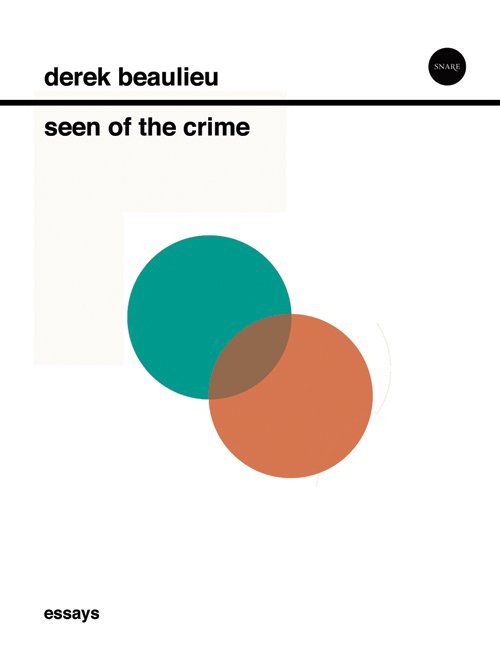 Seen of the Crime, my first collection of essays and criticism has just been announced by Montreal’s Snare Books for Fall 2011. Snare is one of the best emerging presses in Canada and every title they make is worth the price of admission…
 The City of Calgary Announces Short List for W.O. Mitchell Book Prize
The City of Calgary, the Writers Guild of Alberta and Uptown 17 BRZ are pleased to announce the short list authors for The City of Calgary W.O. Mitchell Book Prize, one of 17 awards presented as part of The Calgary Awards.
The three finalists include Derek Beaulieu for How to Write(Talon Books), Weyman Chan for Hypoderm (Talon Books), and Clem Martini and Olivier Martini for Bitter Medicine (Freehand Books).
In How to Write,Derek Beaulieu writes an indexical, playful and innovative “how to” manual like no other. Derek is a Canadian poet, publisher and anthologist who studied contemporary Canadian poetics at the University of Calgary.
Hypoderm is Weyman Chan’s third collection of poems subtitled “notes to myself” which is a compilation of observations, intimations and recognitions of mortality. Weyman is a Calgary-born poet whose writings have appeared in many Alberta anthologies over the last two decades.
In Bitter Medicine, award-winning playwright Clem Martini chronicles his family’s 30-year struggle with schizophrenia that has plagued those closest to him – his brothers Ben and Olivier. The book is complemented by Olivier Martini’s childlike yet expressive drawings. Both Clem and Olivier reside in Calgary.
The City of Calgary established the W.O. Mitchell Book Prize in honour of the late Calgary writer W.O. Mitchell to recognize literary achievement by Calgary authors. The $5000 prize is awarded each year for an outstanding book published in the award year. The 2009 recipient was Gordon Pengilly for Metastasis and Other Plays.
The winner of The City of Calgary W.O. Mitchell Book Prize will be recognized at the Calgary Awards presentation on June 15, 2011. The Calgary Awards will be televised live on Shaw TV.
 derek beaulieu's blog