Archives for category: poetics

Ara Shirinyan’s Your Country is Great: Afghanistan – Guyana (Futurepoem books, 130 pp., $15.00) is a poetic engagement with travel writing and geopolitics, where every country from Afghanistan to Guyana (I assume there will be a second volume for the remaining countries) is defined solely through the flattened language of the internet.

Your Country is Great mines online citations of each country’s qualities and gathers them into mind-numbing scripts of unceasing inanities, “instead of accepting current notions of language as a medium of differentiation” Shirinyan “demonstrates its leveling quality, demolishing meaning into a puddle of platitudes.”

Your Country is Great is composed of 81 different poems, one per country, each of which is written solely through internet searches on “[country name] is great.” The results—with all the typographic and syntactic errors intact—are then simply arranged. Shirinyan’s only concession to the ‘poetic’ is enforcing line breaks.

Shirinyan empties the word “great” of all context and force, flattens it to the level of punctuation – suddenly every place on earth is “great”: “I don’t need no dude to say / that Barbados is great / for me to know that”, “”Belarus is great and amazing”, “”Brazil is great; amazing food, intelligent people”, “Canada is great!”, “Ecuador is great!: / ‘don’t be afraid.’” The platitudes are unceasing, but this communal writing also undermines itself.

The barrage of ‘greatness’ empties as the internet’s choir of voices offers such caveats to praise as “’living’ in Belgium is great, / although the deathmetal scene is / not that big over there” and “the need to reduce fat intake in Belgium / is great / and a thorough approach / is desirable.” The rhetoric of travel narratives, and even postcards home from wandering tourists (the mindless prattle of “Having a great time, wish you were here!”), are flattened into a sameness where every destination no matter how mundane is “great” simply because “The people are great, / a lot like us.”

Shirinyan’s Your Country is Great: Afghanistan – Guyana poeticizes the mundane, and makes the language of hyperbole tangible by emptying out its strength. This book is great.

OK, turn the clown off. This is who was in the White House. This is the, uh, this, this is what I’m giving you an example of what the Obamas have done to America ah culturally and socially. They bring a tenth-rate clown like this in who boasts about that he teaches his children how to, uh, his students, so to speak, at the once ex University of Pennsylvania. It’s become a cesspool, uh, what’s happened there. And talks about uncreative writing and how to plagiarize, you hear? Now, when you have a, uh, uh, plagiarist in the White House you would think having a plagiarist pretending to be a poet in the White House in a poetry event … what is this, like, Abbie Hoffman 2? I mean, this is what I’m talking about here, this is not poetry; this is the debasement of our culture. It’s part of the Marxist class warfare. This is what he does and this is what he does and this is how he does it. You say “what are you going on about?” All right, bring it on, I’m showing you who he had there. It wasn’t just the rapper, he has this putz there talking about teaching children, uh, you can’t write anything creative and original, you have to plagiarize everything you turn in. This is a teacher in a college. This is what’s going passing now for a college teacher. It goes back to Obama inviting a so-called college teacher who teaches children to te- to write uncreative writing, where you’re not allowed to write anything original you must plagiarize. It’s the same mentality. It’s the destruction of western civilization. In that sense Obama is acting in a rather s-schizophrenic manner to have a poetry event and invite someone who teaches children that that they must plagiarize. You follow where I’m coming from here?

Right. Yeah.

Alright, it’s a little too esoteric, I get it.

For the week of July 10-16 2011, I am teaching in Bragg Creek as part of the Wordsworth Literary Camp (aimed at 15-19 year olds). I’ll be teaching “Thriving under pressure” in which students will discuss how poets and fiction writers have found means of making language flourish under the most rigorous of restrictions; hone your voice through exercises related to some of the most unusual contemporary books out there: narrative without words, poems without letters, throat-singing and beat-boxing, missing vowels, restricted word-counts, visual poetry, sound poetry — all of these subjects are fodder for a class which will challenge how you see writing and what it means to be a writer.

I’m teaching English 364 – “Poetry Writing I” at the University of Calgary for the 2011/12 academic year. More information about the course can be found here.

I have spent the last week in Manchester and Bury preparing for the 3rd bi-annual Text Festival at the Bury Art Gallery. Curator and writer Tony Trehy has pulled out all the stops for what he claims will be the final iteration of the internationally acclaimed festival (barring any potential touring exhibitions currently in negotiation).
The festival includes participants from around the globe, gathered in a variety of exhibition spaces both within the Bury Art Gallery and throughout Bury. I won’t discuss every artwork in the exhibition but there are highlights (including Trehy’s curation) which deserve special comment.

The Festival’s central exhibition opens with a brief arrangement of contemporary Japanese visual poetry from the collection of Josef Lischinger. Lischinger is the world’s premiere collector of Asian visual poetry and is the author of Japanese Visual Poetry II (Ritter Verlag). Viewers access visual poetry through a discussion of the graphic and artistic possibilities of Japanese ideograms that prompts them to approach the exhibition with a consideration of both the physical appearance of language and its semantic content. The exhibition then presents a series of silkscreen prints by Eugen Gomringer which superimpose English vowels over Japanese characters, transitioning the gallery discussion from ideograms into a vocabulary of English characters, superimposition and the possibilities of the graphicism of text.

Wonder Room - Text Festival

The initial salon is the “Wonder Room” which includes an array of international visual poems. The exhibition is unconventionally hung (to say the least) with pieces arranged at both floor and ceiling level and—most controversially—overlapping each other. Meant to overwhelm the viewer with the cacophony of international directions in visual poetics (and give the viewer a crash course for the typographically unorthodox), the room also reveals a major issue in contemporary visual poetry: visual poetry today suffers from a lack of scale and a lack of editorial acumen. Trehy was inundated with digital submissions that did not consider the size of reproduction beyond the size of the computer screen. Poets submitted their work without digitally preparing it for printing and often omitted printing directions, which left the curator with the task of determining the printing threshold as the point at which the artwork became unacceptably pixellated. Too many visual poets are myopic in their output. They compose work on the screen without considering the size or scale of their final product and the work suffers from that lack of foresight. Poets should compose with an eye for both the page and the gallery, for both the reader and the viewer. A central concern in visual poetry is the materiality of language; this aesthetic concern must be coupled with an eye for the materiality of the artwork itself.

Christian Bok - The Xenotext

From the problematic din of the “Wonder Rooms,” the Text Festival presents three salons of work that more successfully investigates the poetic possibilities of the gallery. Christian Bök’s Xenotext Project presents a 7000-piece table-top maquette of the atomic structure of the poem written for implantation in the DNA of the microscopic extremophile Deinococcus radiodurans. The piece is augmented by the DNA poem (and the RNA reply), and is an exceptional example of the possibilities of visual poetry when it challenges the restrictions of the page.

Pavel Buchler - Studio Schwitters

Another highlight of the exhibition is Pavel Büchler’s “Studio Schwitters.” This monumental installation consists of dozens of antiquated military PA megaphones programmed to perform Kurt Schwitter’s Ursonata at their lowest collective volume. The megaphones are swerved from the Orwellian broadcast of state-sponsored directives to transmission of a text-to-speech computerized reproduction of Schwitter’s epic sound poem. Büchler has recently created an installation piece for a gallery in London that uses decommissioned speakers from the world’s largest stadium (the 220,000 seat Strahov Stadium in Prague) to broadcast the sound of a single bumblebee’s flight. Büchler eschews audio fidelity (which is beyond the capabilities of such monstrous antiquated equipment) in favour of a subtle and delicate misappropriation of technology in the service of ephemeral pastoral beauty.

Shezad Dawood’s work was also an under-discussed highlight of the exhibition. Ron Silliman used neon to construct the sentence “Poetry has been Bury, Bury good to me” —which will be on permanent exhibition in the Bury Tram Station—a construction that reflects poorly on his previous work by trading on his avant-garde reputation to submit a terrible pun. Dawood’s neon pieces, on the other hand, are a series of plinths that represent the epithets attached to Allah’s name in the Koran. On display was “The Majestic”  which entwines the eponymous phrase in neon Arabic into the thorned branches of sage bush tumbleweed. The sage bush is native to Texas (not unlike a previous US president), and the epithet is barely readable though the bush’s branched confusion.

Shezad Dawood - The Majestic

While many of those same poets who submitted work digitally without an eye for the scale and dimensions of the gallery walls also sent work in such vast numbers that they overwhelmed the curator and his staff. Trehy categorizes this impulse as “the urge to over-production” but I believe is indicative of visual poets lacking both confidence and a critical vocabulary for their chosen métier. This lack of criticality not only restricts the discourse around visual poetry but also prevents visual poetry from successfully negotiating the transition into gallery exhibitions. Christian Bök on the Harriet blog anticipates the effect the 2011 Text Festival will have on the audience. I am just as curious to see what the effect will be on the poets themselves.

I plan to continue the post with a discussion of the Text Festival’s performances and some of the other events and conversations I had in Manchester and Bury and later in York and Coxwold…

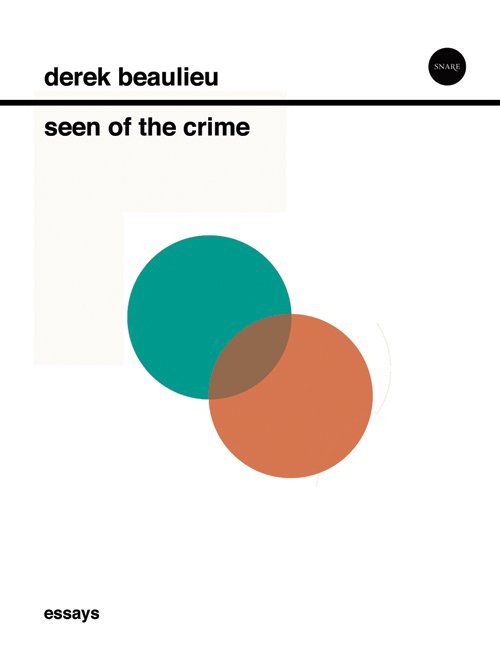
Seen of the Crime, my first collection of essays and criticism has just been announced by Montreal’s Snare Books for Fall 2011. Snare is one of the best emerging presses in Canada and every title they make is worth the price of admission…

“Clearly we are beginning to get nowhere.”
—John Cage

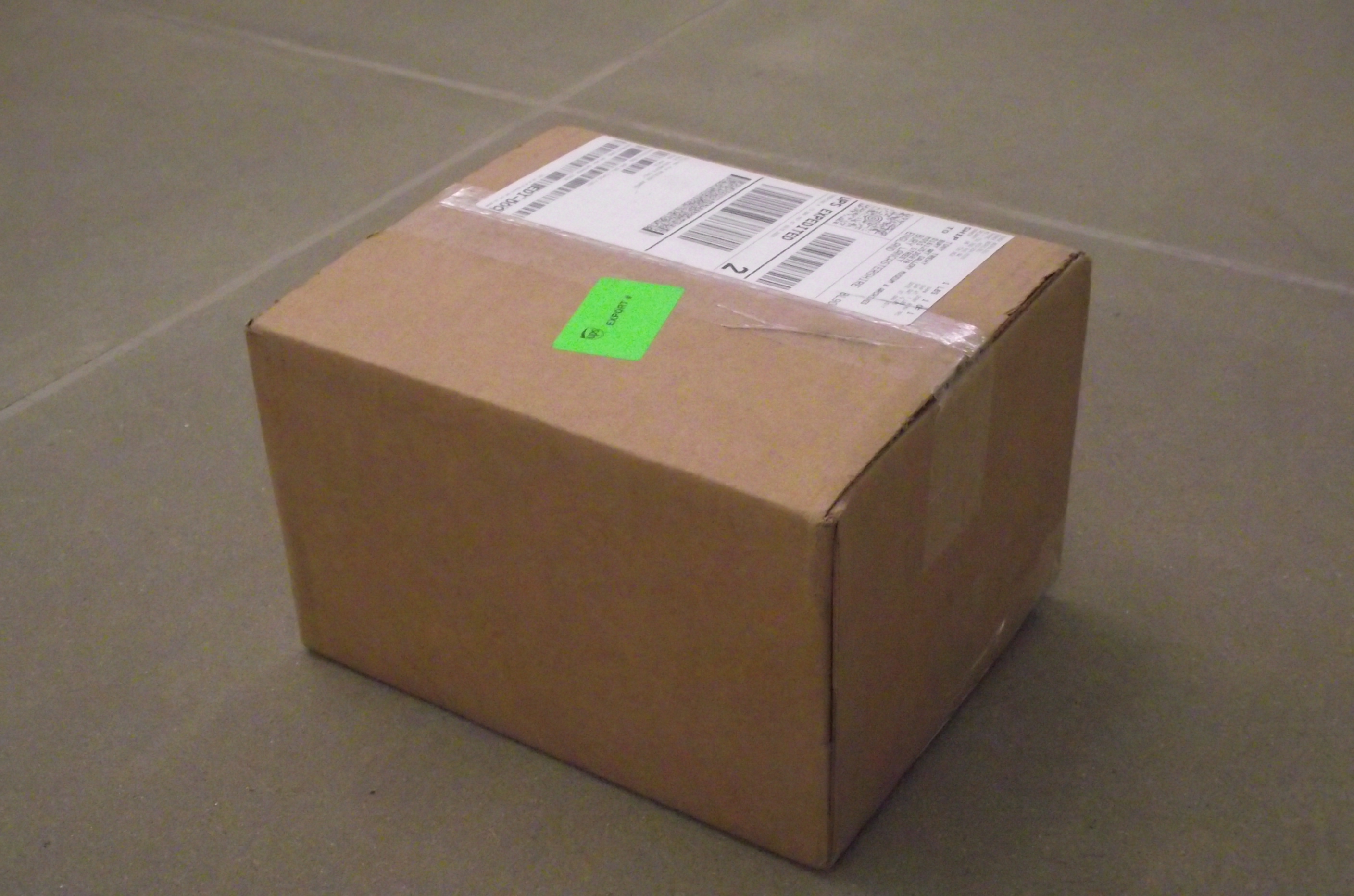
On April 7, 2011 I sent The Bury Museum and Archives an empty box.

I purchased the box for $3.95 (£2.50) and received skeptical looks from the UPS employees when I requested to send the box—devoid of any content—to Bury.

UPS also instructed me that they would not ship an “empty box” and that they needed the contents of the box to fit within one of their predetermined categories. We agreed to enclose within the box a single sheet of blank A4 paper. With this content—as unwritten as it was—UPS could now categorize the contents of the box as “documents” and could continue to process the application for transportation.

Their consternation was compounded with my request to insure the box and its contents to a value of £25,000; the same amount as the yearly wage of an arts worker in the UK (before the current government’s arts funding cutbacks).

UPS, not unexpectedly, refused to insure the parcel for more than $2,500 (£1,500). They would not guarantee the safety of a box of “nothing” and refused to insure the safety of “artwork” (even an empty box) as it was shipped to the UK. For insurance of the amount I requested would have to seek a rider for an independent insurance provider.

I was then asked to complete a Parcel Shipping Order form that included check-boxes which inquired “Are the contents of the parcel breakable?” (Yes) and “Are the contents of the Parcel replaceable?” (No)

Upon my completion of the form, I was invoiced a shipping cost of $135.90 (£86.23) and the box was assigned a tracking number and a series of bar-codes and QR Codes to expedite the box of nothing as it cleared various processing centres and Canadian and British Customs.

These bar-codes and QR Codes are included in The Bury Museum and Archives’ exhibition The History of Tradestamps.

Tradestamps were the cotton industry’s hand printed labels used to indicate the contents of their shipping bundles in order to appeal to their (often illiterate) purchasers. The tradestamps “often depicted scenes, emblems, animals or figures” and the industry “employed hundreds of designers to create these trade marks as an early form of branding.”

The resultant bar-code is the symbol of nothing. In light of the current administration’s draconian cutbacks and their lack of willingness to insure the growth of social programs and the arts, to quote John Cage, “Nothing more than nothing may be said.”

V.

All this might seem very theoretical, very illusory, if something were not actually changing – changing totally, definitively—in our relations with text. Which is why we glimpse an answer to the old ironic question, “Why now?” There is today, in fact, a new element that separates us radically this time from Dickens as from Austen or from Brontë: it is the destitution of the old myths of “depth.”

We know that the whole literature of the novel was based on these myths, and on them alone. The writer’s traditional role consisted in excavating Nature, in burrowing deeper and deeper to reach some ever more intimate strata, in finally unearthing some fragment of a disconcerting secret. Having descended into the abyss of human passions, she would send to the seemingly tranquil world (the world on the surface) triumphant messages describing the mysteries she had actually touched with her own hands. And the sacred vertigo the reader suffered then, far from causing her anguish or nausea, reassured her as to her power of domination over the world. There were chasms, certainly, but thanks to such valiant speleologists, their depths could be sounded.

It is not surprising, given these conditions, that the literary phenomenon par excellence should have resided in the total and unique adjective, which attempted to unite all the inner qualities, the entire hidden soul of things. Thus the word functioned as a trap in which the writer captured the universe in order to hand it over to society.

The revolution which has occurred is in kind; not only do we no longer consider texts as our own, our private property, designed according to our needs and readily domesticated, but we no longer even believe in their “depth.” While essentialist conceptions of man met their destruction, the notion of “condition” henceforth replacing that of “nature,” the surface of things has ceased to be for us the mask of their heart, a sentiment that led to every kind of metaphysical transcendence.

Thus it is the entire literary language that must change, that is changing already. From day to day, we witness the growing repugnance felt by some writers for texts of a visceral, analogical, or incantatory character. On the other hand, the visual or descriptive adjective, the text that contents itself with measuring, locating, limiting, defining, indicates a difficult but most likely direction for a new art of the novel.

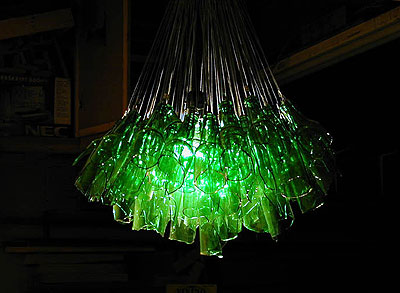
I was at Calgary’s Grand Theatre Saturday night (to see Quebec City’s excellent L’Orchestre L’Homme-Orchestra perform the music of Tom Waits) where Eric Sauvé has two chandeliers installed in permanent exhibition. These pieces were commissioned in response to The New Gallery‘s exhibition of Sauvé’s Yield while i was Administrative Director of the gallery. I had forgotten about his work, but this seems a good opportunity to post my explanatory note written for his 2006 Yield exhibition:

**

From its origins in the medieval Catholic church, the chandelier has been a pointed marker of class & privilege. Through the 18th & 19th Centuries, with newer techniques of glass-making, the chandelier became increasingly aligned with the ruling & merchant classes, & continued to remain a classist signifier of wealth & power. The bourgeois decorated their houses—& found their way in the darkened rooms of their own homes—by the light of purchased, crafted, ornate, cut glass.

The chandelier, with the advent of electrical light, is increasingly an antiquated form of lighting, now even more associated with excess—even the very structure of classic chandeliers require reinforced (& higher) ceilings—necessitating specifically designed rooms to house these devices.

With Eric Sauvé’s Yield, we are no longer presented with a vision of privilege & safety; he has détourned the chandelier through a series of material & contextual interventions. Instead of finely cut glass shimmering safely above us, our heads are threatened by clusters of broken beer bottles emitting the vomitous-green glow of the evidence of an ideological bar-fight.

Hanging slightly too low for functionality & just above the height of injury, Yield disturbs the scale of the gallery space, making the viewer hideously aware of her own body; we move with a slight cringe through a space defined by the jagged edge of the proverbial glass-ceiling. Our own bodies betray our place as class interlopers—we do not belong around these structures. Their nauseous colouring belies the threatening fragility of emptied & shattered remains restructured as a momento mori—a reminder of the temporariness of celebration, uprising & insurrection.

These chandeliers reconfigure cultural & economic bottlenecks; for while the bottle’s necks themselves are intact, their bases are missing, no longer containing or restricting flow. The jagged edges of potential Molotov cocktails are hoisted to the ceiling in clusters hanging just beyond reach—suggesting both an ease of distribution, & a commemoration of the glassy-eyed stare of excess.

Sauvé gathers our refuse, our garbage—these broken beer bottles—& presents them as a threatening reminder of their previous function. Sauvé’s Yield is as much as a silent, illuminating symbol of the power of class as the traditional chandelier is. The reference here, however, is not to the hand that cut the fine crystal glass, but rather to the hand that gripped the bottle by the neck.

What once held ales, liquors — the very spirit of classist debauchery & celebration—are now raised to the ceiling (mimicking the bottles being raised in a toast) & hanged in a glorious, eerie revolt.

IV.
As for the novel’s words, they may themselves suggest many possible interpretations; they may, according to the preoccupations of each reader, accommodate all kinds of comment—psychological, psychiatric, religious or political—yet their indifference to these “potentialities” is apparent. Whereas the traditional text is constantly solicited, caught up, destroyed by these interpretations of the author’s, ceaselessly projected into an immaterial and unstable elsewhere, always more remote and blurred, the conceptual text remains, on the contrary, there. It is the commentaries that will be left elsewhere; in the face of this irrefutable presence, they will seem useless, superfluous, even improper.

Exhibit X in any detective story gives us, paradoxically, a clear image of this situation. The evidence gathered by the inspectors—an object left at the scene of the crime, a movement captured in a photograph, a sentence overheard by a witness—seem chiefly, at first, to require an explanation, to exist only in relation to their role in a context which overpowers them. And already the theories begin to take shape: the presiding magistrate attempts to establish a logical and presiding link between things; it appears that everything will be resolved in a banal bundle of causes and consequences, intentions and coincidences….

But the story begins to proliferate in a disturbing way: the witnesses contradict one another, the defendant offers several alibis, new evidence appears that had not been taken into account … And we keep going back to the recorded evidence: the exact position of a piece of furniture, the shape and frequency of a fingerprint, the word scribbled in a message. We have the mounting sense that nothing else is true. Though they may conceal a mystery, or betray it, these elements which make a mockery of systems have only one serious, obvious quality, which is to be there.

The same is true of the language around us. We had thought to control it by assigning it a meaning, and the entire art of the novel, in particular, seemed dedicated to this enterprise. But this was merely an illusory simplification; and far from becoming clearer and closer because of it, language has only, little by little, lost all its life. Since it is chiefly in its presence that the text’s reality resides, our task is now to create a literature which takes that presence into account.