Archives for posts with tag: poetry

2024, as a writer and an arts-administrator, felt like a between year—a year that will lead to new conversations, new growth, and new phases—a year that foreshadows more than it holds itself.

As Banff Centre’s Director of Literary Arts, I developed a slate of in-person and digital residencies which found homes across Banff Centre campus while renovations on Vinci Hall continue. Literary Arts residencies—all of which were scholarshipped at 100% of tuition and 50% of room/board—enabled international writers to work with exceptional faculty: January’s “Winter Writers” residency with Casey Plett and Waubgeshig Rice (and Alana Wilcox from Coach House Books); February’s “Late Winter” Online residency with Fawn Parker and Annick MacAskill; April’s “Form and Constraint” residency with Ian Williams and Daniel Levin Becker (and John Yao from Black Square Editions); June’s “Memoir” residency with Kyo McLear and Elamin Abdelmahmoud (and Jen Sook Fong Lee from ECW Press); August’s “Summer Writers” residency with Sina Queyras and A.E. Stallings (and Danielle Dutton from Dorothy, a Publishing Project); September’s “Early Career Writers of Fiction” residency with Kazim Ali and Kim Fu (and Norm Nehmetallah from Invisible Books); and November’s “Literary Journalism” residency with Charlie Foran and Ayelet Tsabari (and Micah Toub from The Globe and Mail).

Banff Centre‘s Literary Arts department has some amazing plans for 2025 with residencies focused on Environmental Journalism, Horror Writing, Science Fiction, Literary Journalism / Creative Non-fiction, Comics and Graphic Novels, Early Career Writers of YA and Children’s Books, and several open topic poetry/prose residencies … all responding to the needs of international writers. Lots of great news on the Banff Centre website. Literary Arts will not only be increasing the number of residencies offered, but also the number of spaces available for writers—all while maintaining scholarship levels and the mentor/writer ratio.
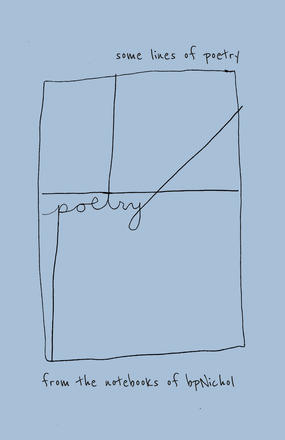
In 2024, in celebration of what would have been bpNichol’s 80th birthday, Coach House Books published Some Lines of Poetry from the Notebooks of bpNichol which I edited with my old friend Gregory Betts. Gregory and I have collaborated a lot over the years, and this project took several years and was an incredibly pleasure to work on. Nichol’s notebooks and ideas around poetry continue to thrill me. I encourage you to pick up a copy.

2024 is my final year as the Town of Banff’s Poet Laureate. It has been a real pleasure to host events, workshops and readings in our small mountain town for the last few years. I know that Heather Jean Jordan will be an exceptional Poet Laureate for 2025-2026.

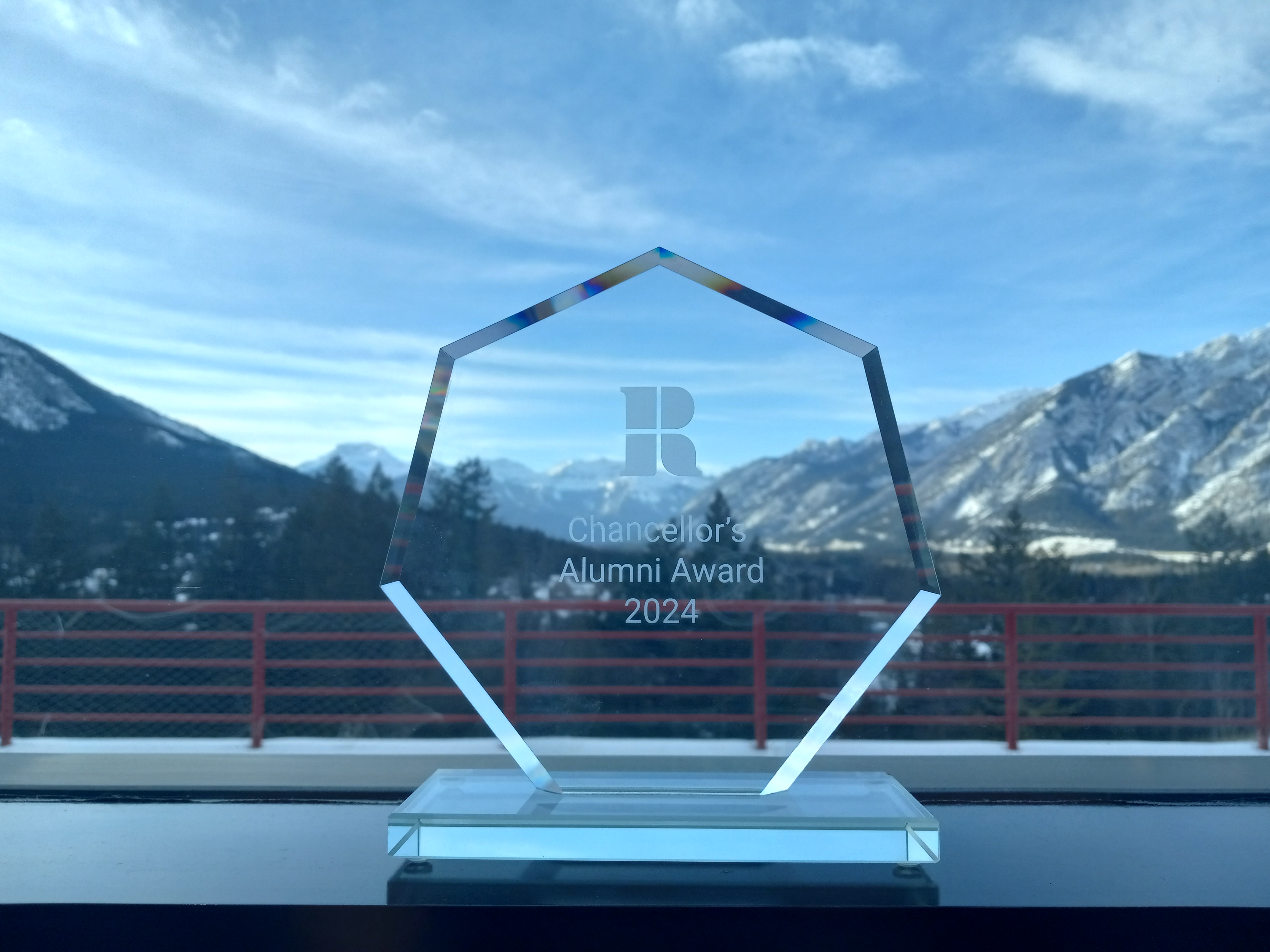
I received the Chancellor’s Alumni Award from University of Roehampton … which is a frought recognition for sure as it comes just a few short years after Roehampton eradicated their Creative Writing department, laying off all my peers and abandoning an exceptional centre for UK-based creative writing. Another victim of massive cuts to post-secondary education in that country.
This year I spoke to students at Ontario College of Art and Design and Concordia University, hosted bookbinding workshops at the Banff Public Library, and performed at Banff’s Legion Hall and Toronto’s Supermarket. I exhibited my visual poetry as part of Con Creta & Son Ora (Paper View Books, Leiria, Portugal), the Banff Centre Staff Summer Showcase (Project Space, Glyde Hall, Banff Centre for Arts and Creativity, Banff, AB), Exposition littéraire autour de Mallarmé (Centre for Book Arts, New York, USA), and A Collection of Modified Bookmarks (Bower Ashton Library, UWE Bristol, Bristol, UK and Portico Library, Manchester, UK). I was also a juror for the 2024 RBC Bronwen Wallace Award.

It was a thrill to attend the 2024 London Small Publishers Fair, the 2024 SpokenWeb Symposium at the University of Calgary, and the AWP Conference in Kansas City … and to host Naomi Klein onstage at Banff Centre’s Jenny Belzberg Theatre in front of over 500 audience members.

I published in The Typescript, Westword, Synapse, The Rocky Mountain OutlookAlberta Views, ToCall, Petrichor, and The Ampersand Review; and in the anthologies Extrins and Coup de Dés (Collection) Books and Ideas After Mallarmé.

There were also 8 different small press editions of my work published in 2024: Il Pleut (Edinburgh: Oo Press), Titelløs (fra Kern) (Copenhagen: Addenda), Seven Squares (Lieria: Paper View books), In memory of Bob Cobbing (Edinburgh: Essence Press), Il Pleut (London: Intergraphia), the 2nd edition of Future Poems (London: Poem Atlas) and two chapbooks from my own No Press: Information in Memoriam Ruth Wolf-Rehfeldt and Nature or Habit.

I continue to place free PDFs of all of my work online—help yourself.

Through No Press I published 14 different editions of poetry and prose – including 5 issues of The Minute Review – with contributions by 50 different international, national and local emerging and established writers. Each edition was meant to help spread the word of risk-taking international writing. Thank you for trusting me with your work. 

Oh, and here’s my “Most Engaging Books of 2024” list, highlighting some of the finest books I’ve read this year.

None of this would have been possible without my incredible partner, Kristen, and our amazing kid Maddie (and our angry cat Alice and now our all-over-everything puppy Lou). My parents and mother-in-law are also steady voices of support and love; thank you.

In so many ways I only excel because of the strength and support of my community of friends and colleagues, especially Gary Barwin, Gregory & Lisa Betts, Christian Bok, Kit Dobson & Aubrey Hanson, Helen Hajnoczky, Nasser Hussain & Kaley Kramer, Aaron Tucker & Julia Polyck-O’Neill, rob mclennan, Astra Papachristodoulou, and so many others. Thank you.

Here’s to 2025.

After several years of pandemic and struggle, 2023 felt like a growth year – a year to reassess, reappraise, and return to new ways of creating, thinking, and responding. 2023 is gone in just a few short weeks, here’s what I was up to this year:

As Banff Centre’s Director of Literary Arts, I developed a slate of residencies—both online (allowing participants to receive mentorship from their own home, fitting in with their schedules) and in person (it’s so great to welcome writers to Banff Centre’s campus). Literary Arts residencies—all of which had tuition 100%-scholarshipped—enabled international writers to work with exceptional faculty: January’s Winter Writers Residency with Nasser Hussain, Lisa Robertson, and guest speaker Holly Melgard (Troll Thread), March’s Graphic Novels and Visual Narratives with Matt Madden, Bishakh Som, and guest speaker Andy Brown (Conundrum Press); June’s Literary Journalism Residency with Charlotte Gill, Carol Shaben, and Michael Harris; July’s Summer Writers Residency with Stuart Ross, Canisia Lubrin, and guest speaker Leigh Nash (Assembly Press); October’s Emerging Writers Residency: Poetry with Sharanpal Ruprai, Suzanne Zelazo, and professional guest Naomi Lewis (Freehand Books) and November’s Late Fall Writers Online Residency with Moez Surani and Klara du Plessis. Banff Centre Literary Arts has some amazing plans for 2024 with faculty Waubgeshig Rice, Kyo McLear, Elamin Abdulmahmoud, Casey Plett, Sina Queyras, A.E. Stallings, Ian Williams, Charlie Foran, Ayelet Tsabari, Daniel Levin Becker, Fawn Parker, Annick MacAskill, Kazim Ali, Kim Fu, Norm Nehmetallah, John Yau, Jen Sook Fong Lee, Danielle Dutton, and more … all responding to the needs of international writers. Lots of great news on the Banff Centre website.

In 2023 Malmo, Sweden’s Timglaset Editions published my Silence: Lectures and Writings and I am thrilled with the book. Crafted over the pandemic, and featuring an afterword by Peter Jaeger, Silence responds to every page of John Cage’s book of the same title, creating a sonic landscape of breath, reflection, and pause. Timglaset’s Joakim Norling is unwavering in his support of risk-taking books and I’m honoured to have published with him again.

This year also saw the publication of the 2nd edition of Kern from California’s Punctum Books, returning that long out-of-print volume back to a readership.

In addition to being Banff’s Poet Laureate, I spoke to students via Zoom at University of Washington – Bothell, York University, and Douglas College and performed readings at Calgary’s Pages Books on Kensington, Ottawa’s Carleton Tavern, Vancouver’s Fairleigh Dickinson University, Banff’s Legion Hall, and London, England’s London Small Publishers Fair. I exhibited my visual poetry as part of This is a Poem (Central Branch, Calgary Public Library. Calgary, AB.) and “I Wish…” (Shandy Hall Gallery, Coxwold, Yorkshire, UK.)

I had work published in The Rocky Mountain Outlook, Westword, Periodicities, ctrl+alt+del, Arc, Oesa, Petrichor, The Penetang Review, The Stony Thursday Book, and Right Click Save and in the anthologies Poème Objkt Sbjkt, Report from the Smith Society Vol. 1, Interpoem: A Visual Anthology, and, in translation, in Nouvelles de l’Alberta: Anthologie de textes littéraires / Alberta Shorts : An Anthology of Literary Texts.

There were also 8 different small press editions of my work published in 2023: Ontario Hydro and a 2nd edition of Tattered Sails (both from above/ground press), 🙂 (Anstruther Press), Future Poems (Poem Atlas), as well as UMNV, Chinook Arch, Network, and Ossification (all from my own No Press).

Los Angeles’ SEEN STUDIOS created an incredible Riso-printed edition of my full colour visual poetry as the 4th issue of LAY_OUT where every page on every copy of the book is completely unique; a randomized explosion of technicolour typography.

I continue to place free PDFs of all of my work online—help yourself.

Through No Press I published 17 different editions of poetry and prose – including 3 issues of  The Minute Review – with contributions by 47 different international, national and local emerging and established writers. Each edition was meant to help spread the word of risk-taking international writing. Thank you for trusting me with your work. Paper & Thread: 25 years of housepress and No Press celebrated a quarter-century of my small press publishing a print-on-demand edition of reflection by authors around the world.

None of this would have been possible without my incredible partner, Kristen, and our amazing kid Maddie (who has just published a monograph with UBLibraries on Julie Johnstone’s Essence Press). My parents and mother-in-law have also been a steady voice of support and love; thank you.

In so many ways I only excel because of the strength and support of my community of friends and colleagues, especially Gary Barwin, Greg and Lisa Betts, Christian Bok, Kit Dobson, Helen Hajnoczky, Aubrey Hanson, Nasser Hussain, Kaley Kramer, rob mclennan, Astra Papachristodoulou, and so many others. Thank you.

Here’s to 2024.

PoetLaureateLogo To celebrate National Poetry Month and UNESCO World Poetry Day, each year municipalities across Canada are challenged to bring poetry into politics. One mayor leads this annual challenge by inviting a poet to read at a council meeting in March or April, and challenges mayors and councils across the nation to follow suit and join the celebration. Initiated by Regina Mayor Pat Fiacco in 2012, the Mayor’s Poetry City Challenge celebrates poetry, writing, small presses and the contribution of poets and all writers to the rich cultural life in our country. Last year the torch was passed from Regina to Calgary, and Mayor Nenshi’s first challenge was a huge success. With over seventy participants, the 2015 challenge was our largest yet—but we hope for even more in 2016!

As Calgary’s Poet Laureate, I have a challenge for writers and readers across Canada.

I ask that writers and readers across Canada explore how literature has reflected and created their own communities … find spaces of literary importance (homes where writers once lived, areas authors have written about, moments of historic literary import, etc), photograph those spaces and post on twitter with a brief description and the hashtag #writtenrighthere

Check out the writtenrighthere blog!

Help document how Canadian literature reflects and affects how we understand our communities and our place.

It could be an intersection or park named in a book, it could be a mountain range celebrated in a poem, it could be the former home of a beloved poet or the location of a Canadian press; it could be a park named after your favourite literary figure or a surprising connection with how Canadian literature has developed just down the street …

How have the spaces of your community shaped (or been shaped by) literature? Where do you see the spaces that have created Canadian Literature in your community?

#writtenrighthere celebrates literary history … and how writing comes from community.


I’m teaching English 364 – “Poetry Writing I” at the University of Calgary for the 2011/12 academic year. More information about the course can be found here.

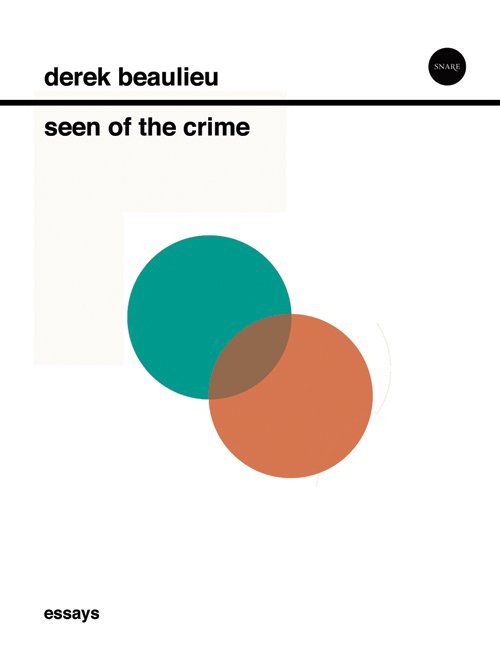
Seen of the Crime, my first collection of essays and criticism has just been announced by Montreal’s Snare Books for Fall 2011. Snare is one of the best emerging presses in Canada and every title they make is worth the price of admission…

The City of Calgary Announces Short List for W.O. Mitchell Book Prize

The City of Calgary, the Writers Guild of Alberta and Uptown 17 BRZ are pleased to announce the short list authors for The City of Calgary W.O. Mitchell Book Prize, one of 17 awards presented as part of The Calgary Awards.

The three finalists include Derek Beaulieu for How to Write(Talon Books), Weyman Chan for Hypoderm (Talon Books), and Clem Martini and Olivier Martini for Bitter Medicine (Freehand Books).

In How to Write,Derek Beaulieu writes an indexical, playful and innovative “how to” manual like no other. Derek is a Canadian poet, publisher and anthologist who studied contemporary Canadian poetics at the University of Calgary.

Hypoderm is Weyman Chan’s third collection of poems subtitled “notes to myself” which is a compilation of observations, intimations and recognitions of mortality. Weyman is a Calgary-born poet whose writings have appeared in many Alberta anthologies over the last two decades.

In Bitter Medicine, award-winning playwright Clem Martini chronicles his family’s 30-year struggle with schizophrenia that has plagued those closest to him – his brothers Ben and Olivier. The book is complemented by Olivier Martini’s childlike yet expressive drawings. Both Clem and Olivier reside in Calgary.

The City of Calgary established the W.O. Mitchell Book Prize in honour of the late Calgary writer W.O. Mitchell to recognize literary achievement by Calgary authors. The $5000 prize is awarded each year for an outstanding book published in the award year. The 2009 recipient was Gordon Pengilly for Metastasis and Other Plays.

The winner of The City of Calgary W.O. Mitchell Book Prize will be recognized at the Calgary Awards presentation on June 15, 2011. The Calgary Awards will be televised live on Shaw TV.

PennSound has just created an author page for me, featuring my reading at the Kelly Writers House March 31, 2011.

On April 27 and 28th I will be installing an original concrete poem in the windows of the Bury Art Gallery as part of the Text Festival. In addition to that installation, the festival includes my Prose of the Trans-Canada and my Box of Nothing.

The Festival also includes visual poetry from Satu Kaikkonen, Eric Zboya, Geof Huth and a tonne of other international poets; performances by Christian Bok, Ron Silliman, Karri Kokko, Jaap Blonk and more; installation work by Pavel Buchler, Simon Morris and many others. This is the 3rd bi-annual Festival and promises to be an incredible affair. If you find yourself in the UK (or environs), check it out!

Geof Huth has just reviewed and riffed upon my Prose of the Trans-Canada. Check it out.

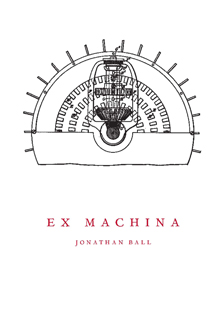
I recently used Jonathan Ball’s Ex Machina (Toronto: Bookthug, 2009) in a first year creative writing class.

Charged with teaching 22 young students how to write fiction, I shirked my task and concentrated on challenging the students to question their assumptions about how (or if) fiction “works.”

Weekly writing assignments requested that they model their work on poetic texts, Oulipan exercises and abstract comics. I asked them to transcribe every word on their street and all the words they said for an hour of typical conversation. They wrote using only questions, using only other people’s texts (excising and overwriting), starting every sentence with “I Remember…”; they sculpted their assignments, recorded their assignments—and some went so far as to build their work into self-creating video games.

They discussed and crafted responses to Melville, Gogol, Kafka, Moure, Slater, Calvino, Borges, Molotiu, rawlings, Blonk, Morris, Lethem and more. Their mid-term assignment was to reply in a piece of “fiction” (however they defined that) to Jonathan Ball’s Ex Machina.

Catalogued by the National Library of Canada as “poems,” Ball’s Ex Machina (which he considers a SF/horror novel) is a series of footnoted and intertwined aphorisms, quotations, statements and diagrams about the un-holy combination of book and machine, writer and reader, host and parasite.

With each page, the text becomes a labyrinth in which the reader’s breadcrumbs are devoured by mice as fast as they can be placed. Ex Machina is a predator with an elusive cat-and-mouse game in which it teases the reader into defining the terms of engagement, but “[i]n the garden of forking paths, you appear always to move forward.” (28) Ball’s text is purposefully evasive, preferring to challenge the reader on her need for clarity and purposefulness, for “If you are going to insist / on a poem, / I am going to persist / in this evasion.” (39)

Ball posits that the poetic text—or, in this case, a horror novel masquerading as a poetic text—is a textual symbiote which uses the reader to perpetuate its own survival:

The poem is not written by the author. [52] It is the root, the cause of authors. [57] Like a virus moving inside your skull. [43] To eat, and grow, and change. [61]. (51)

William Carlos Williams notably argued

There’s nothing sentimental about a machine, and: A poem is a small (or large) machine made out of words. […]Prose may carry a load of ill-defined matter like a ship. But poetry is a machine which drives it, pruned to a perfect economy. As in all machines, its movement is intrinsic, undulant, a physical more than a literary character. (“Introduction to The Wedge”, in Selected Essays of William Carlos Williams. New York: New Directions, 1969. 256.)

William S. Burroughs notoriously postulated “language is a virus from outer space” and that we are simply hosts for the spread of this linguistic extraterrestrial disease. Ball’s novel articulates the nature of the parasitic relationship between book, text and reader. While Phyllis Webb famously stated “[t]he proper response to a poem is another poem,” Ball makes the generative quality that Webb desired fraught with the sinister overtones of mutation, for the book machine seeks those “who process the poem, to great effect: host minds for newer and stronger strains” (57)

Ball has published Ex Machina under a Creative Commons License, and encourages readers to respond. He hopes that readers will allow the text to infect their own writing practices for “[t]he human being [is] a larval stage in the reproductive process of the book-machines.” (57)

Ex Machina used my “larval stage” undergraduate students to reproduce as video games, hollowed-out books, 15-minute sitcoms, Norwegian rock operas, illustrated shuffle-texts, scrapbooks made from ransom-note-like assembled texts, photo-essays, comic books and narrative-driven short stories.

With Ex Machina the meme speaks and it is hungry.