
CBC Radio Calgary includes my entreaties to students in “so what’s your spiel?“
CBC Radio Calgary includes my entreaties to students in “so what’s your spiel?“
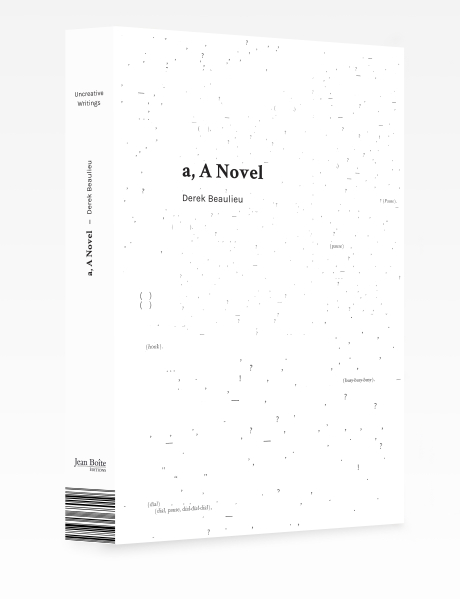
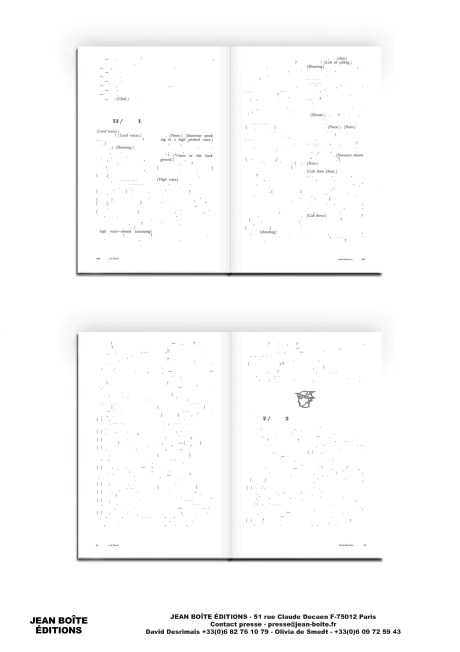
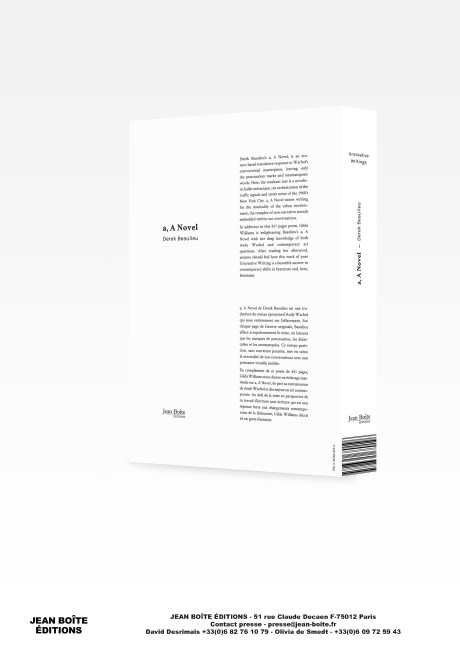
Derek Beaulieu’s a, A Novel is an erasure-based translative response to Andy Warhol’s eponymous novel. Beaulieu carefully erases all of the text on each page of the original work, leaving only the punctuation marks, typists’ insertions and onomatopoeic words. The resultant text is a novelistic ballet mécanique, a visual orchestration of the traffic signals and street noise of 1960’s New York City. This
visually powerful half score/half novel highlights the musicality of non-narrative sounds embedded within conversation.
Published in the autumn of 1968, Andy Warhol’s a, A Novel consists solely of the transcribed conversations of Factory denizen Ondine (Robert Olivo). Ondine’s amphetamine-addled conversations were captured on audiotape as he haunted the Factory, hailed cabs to late-night parties and traded gossip with Warhol and his coterie. The tapes were transcribed by a small group of high school students. Rife with typographic errors, censored sections, and a chorus of voices, the 451 pages of transcription became, unedited, “a new kind of pop artefact”. These pages emphasize transcription over narration, chance over composition.
In his book, Derek Beaulieu offers a radical displacement of Andy Warhol’s work. He erases the novel’s speaking characters — members of the mid-1960s New York avant-garde — and preserves only the musicality of their conversations. Beaulieu perfectly provides a tangible example of Theodor Adorno’s theory elaborated in his essay “Punctuation Marks” (1956), in which he argues that punctuation marks are the “traffic signals” of literature and that there is “no element in which language resembles music more than in the punctuation marks”. This visual poetry is accompanied by an essay by Gilda Williams, “Breaking Up is Hard to Do. Men, Women, and Punctuation in Warhol’s Novel a”. Her deep knowledge of both Andy Warhol’s work and the history of contemporary art explores the complicated history of the original novel and highlights the urgent and precise spirit of Derek Beaulieu’s work—the work of an artist who situates Uncreative Writing at the core of contemporary literature and also shows in his book a feminist gesture.
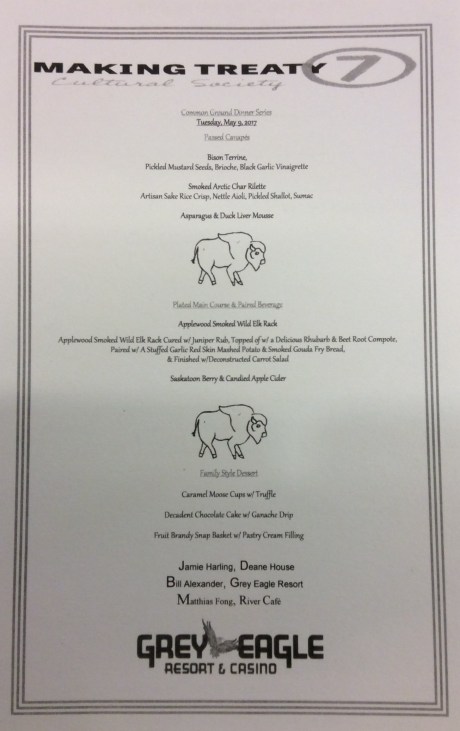
Was very excited to be part of the final dinner in the Making Treaty 7 Common Ground Dinner Series last night. Making Treaty 7 explores the historical significance of the events at Blackfoot Crossing in 1877, while investigating the consequences and implications of Treaty 7, 140 years later. Over a fabulous meal at the Tsuu T’ina Nation’s Grey Eagle Restaurant we discussed the artistic and cultural implications of Treaty 7 and how we perceive the land.
At the dinner I premiered my artistic response to Making Treaty 7:
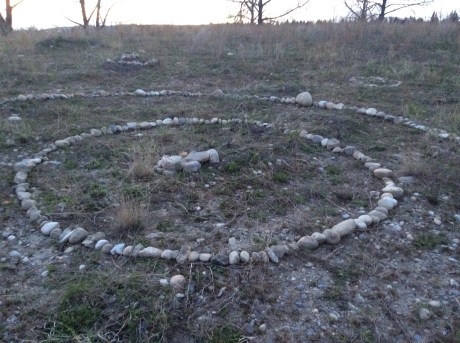
For the creation of Seven Approximate Circles, the seven participants in the “Safety & Security” discussion group of the Common Ground Dinner Series were asked to bring a small pebble from “home” (however they defined the word). I then traced each pebble once with ink diluted in the water of Calgary’s Bow River (and applied with a horse hair brush) and six additional times with graphite – 7 tracings per pebble. Echoing the treaty number of the Calgary region (Treaty 7), the 7 sacred teachings and the changing vision of home; Seven Approximate Circles leaves their gestures open, searching for closure; lines bent in healing discussion.

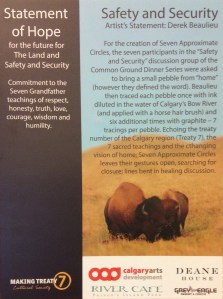
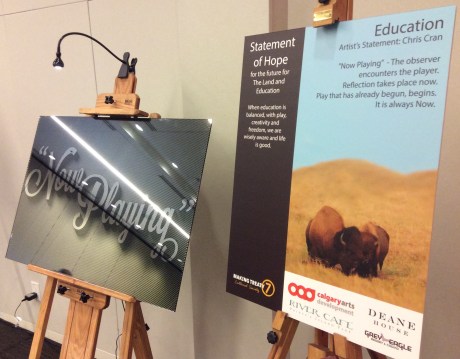
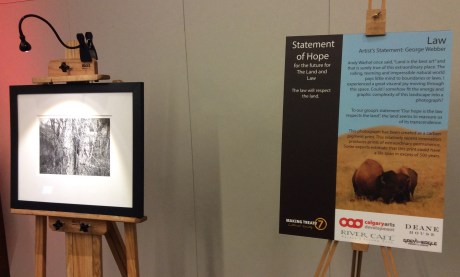
This final dinner also included work by a number of artists, including an installation by Tamara Cardinal on the crest behind Grey Eagle





Coming soon from Malmo, Sweden’s Timglaset press:


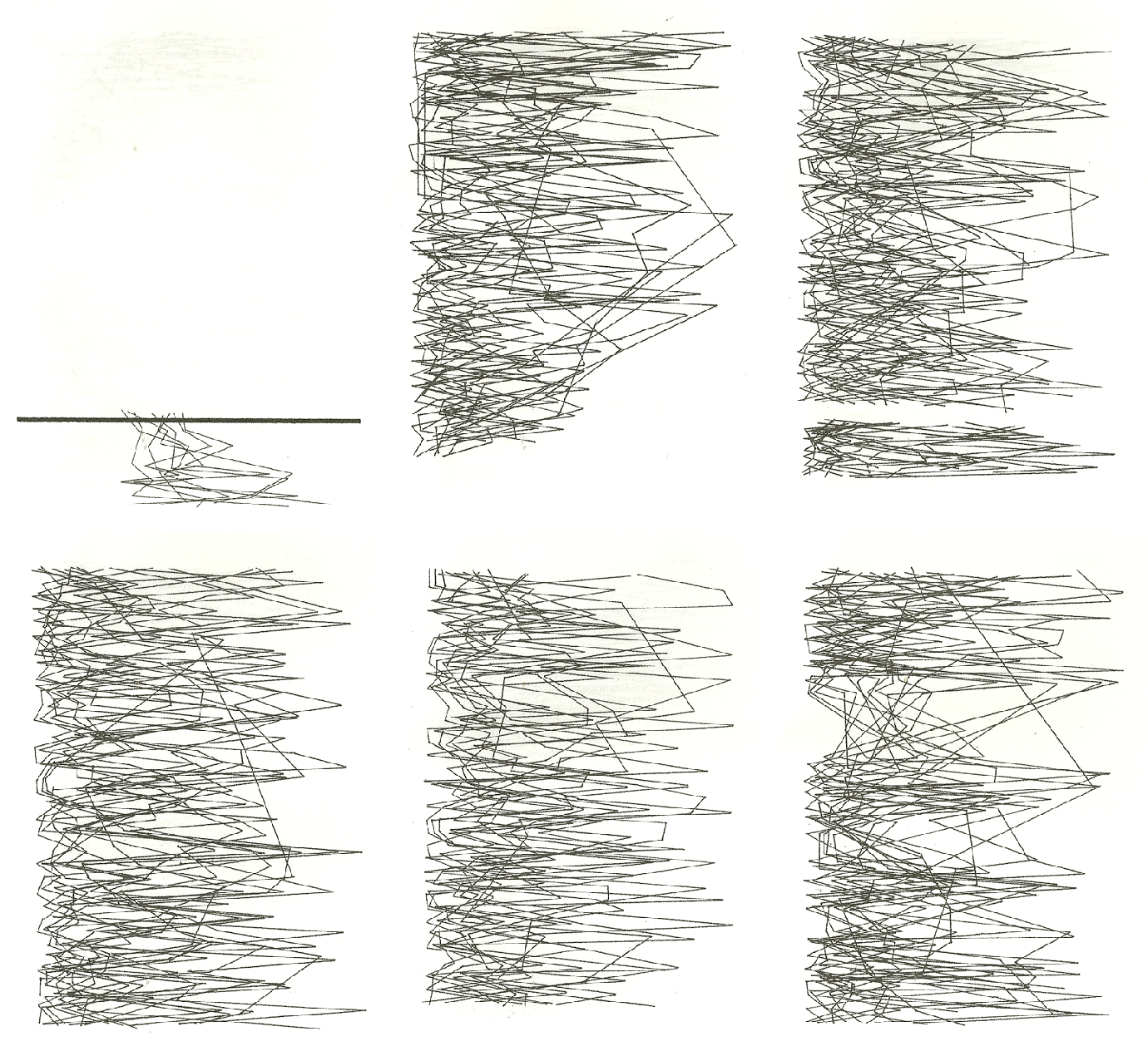 Arnold McBay has animated the entirety of my Flatland into a single animated GIF
No Press is proud to announce the publication of
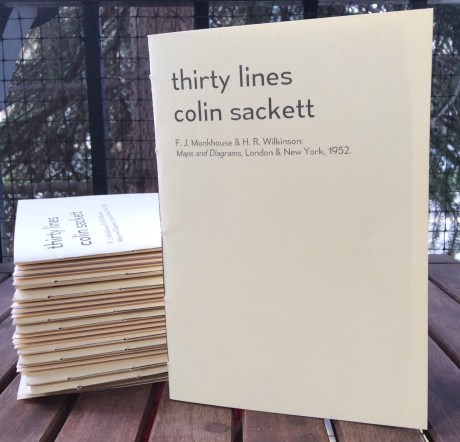 thirty lines
by colin sackett.
Published in an edition of 50 hand-bound copies — of which only 20 are for sale.
$8.00ea + postage
To order a copy, please email derek@housepress.ca
Since the late 1970s Colin Sackett has produced hundreds of printed works. His own work has been an investigation of editing and content, the license to take broad issue and to play with the form, both disruptively and demonstrably. Founded the imprint Uniformbooks in 2011 as a series for the visual and literary arts; cultural geography and history; music and bibliographic studies; and also a printed quarterly, Uniformagazine. Sackett can be found on twitter at @Uniformbooks

Thank you to Bern, Switzerland’s edition taberna kritika for publishing my KONZEPTUELLE ARBEITEN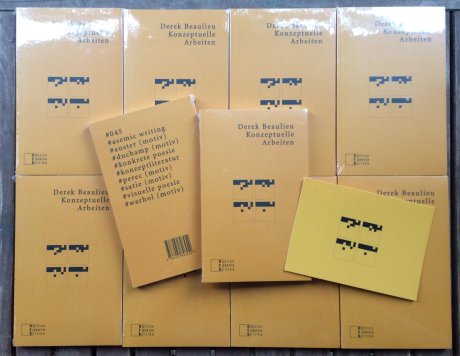
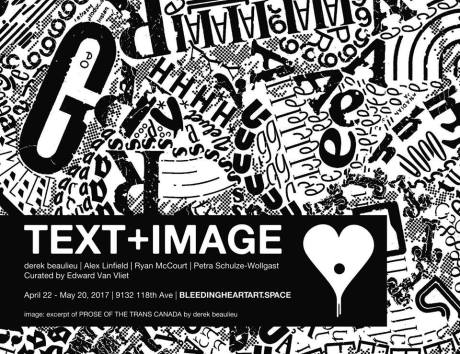
I have work in a pair of group exhibitions now on view; Text + Image at the Bleeding Heart Art Space (Edmonton, Alberta) and Traveling Exhibit: Seasons & Directions at Massey College (Toronto, Ontario).




 derek beaulieu's blog