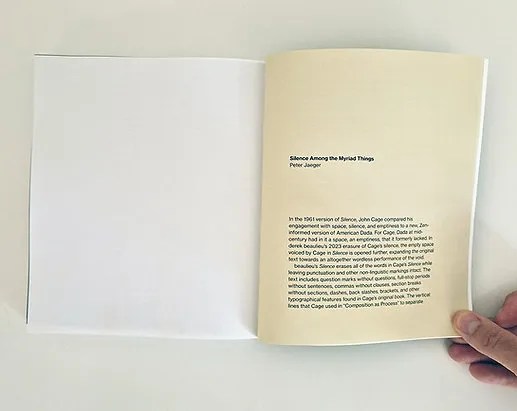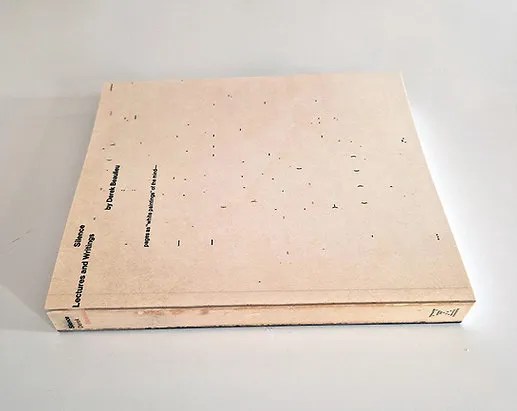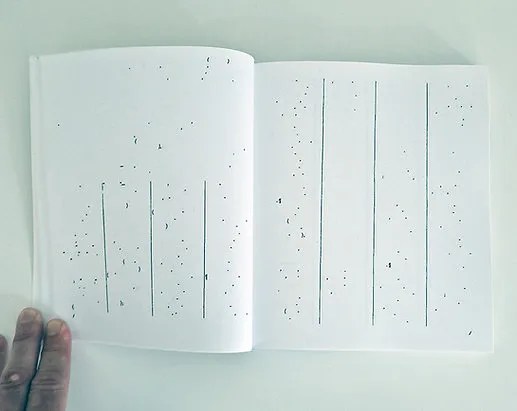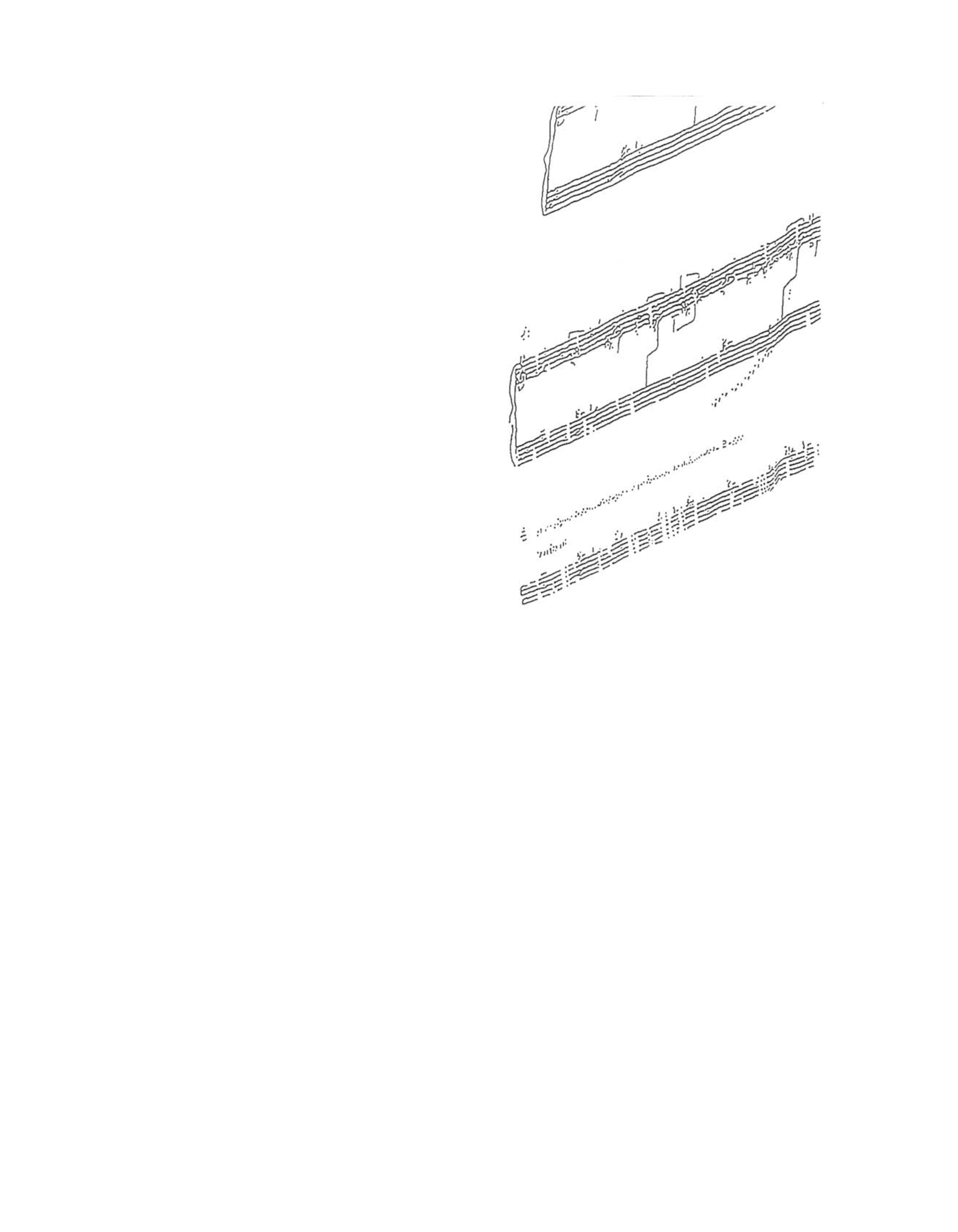

Maryam Mulialee discusses my VEXATIONS Project as part of her paper “Recycling Destroyed Cities: Ruined Archives in Copy Art” in Frames Cinema Journal (issue 19, Mar 2022).


Maryam Mulialee discusses my VEXATIONS Project as part of her paper “Recycling Destroyed Cities: Ruined Archives in Copy Art” in Frames Cinema Journal (issue 19, Mar 2022).


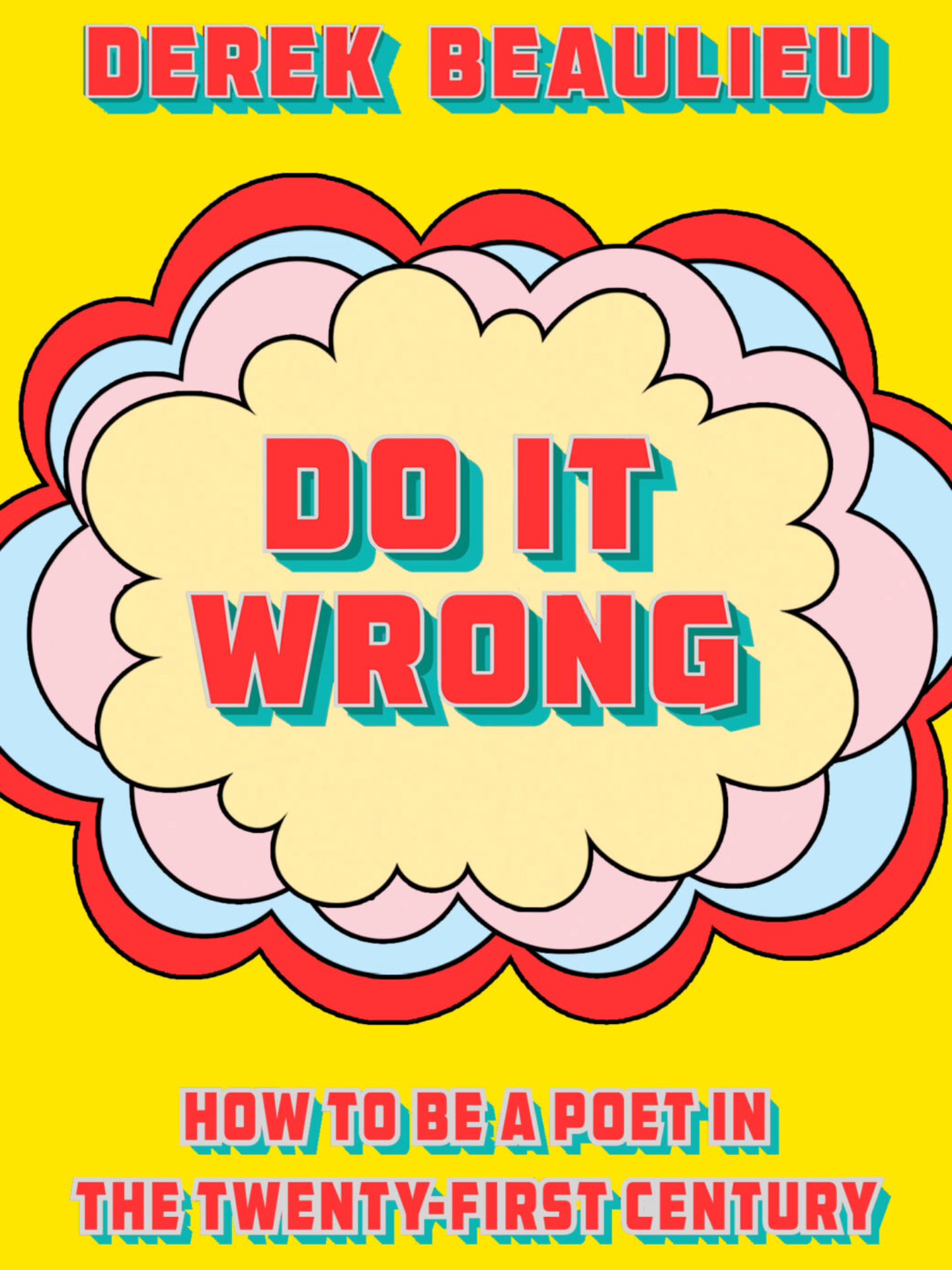
A radically liberating collection of essays, ideas and approaches to writing and teaching poetry
Do It Wrong is a short, snappy series of provocations and suggestions designed to help poets think outside the box and foster creativity.
It’s a permission slip to take a path others reject, to do the counter-intuitive thing, to embrace the weird.
It’s a guidebook designed to bring poets together, to question our assumptions, and to move past the “business as usual” educational models into the new, the strange, and the “wrong.”
And it’s a playful, purposeful contribution toward the building of stronger, more resilient writing communities.
For readers of Beth Pickens’s Make Your Art No Matter What and Austin Kleon’s Steal Like an Artist, Derek Beaulieu distills 20 years of experience teaching creative writing into a joyfully mischievous manifesto on how to write and teach poetry with meaning.
New from No Press!
SIGILS FOR INSPIRATION by Kevin Stebner
published in an edition of 50 copies, each with handsewn bindings.
copies are $5.00 each including postage
to order email or paypal derek@housepress.ca
A suite of masterful visual poems, SIGILS FOR INSPIRATION was created using dry-transfer lettering with breathtaking sensitivity exposing a beautiful, unexpected symmetry.

So excited to announce the 1st slate of Banff Centre for Arts and Creativity‘s Literary Arts 2026/27 Residencies!
– Late Spring with Jessica Westhead, Philip Terry, and Sawako Nakayasu!
– Literary Journalism with Manjula Martin, Cheryl Thompson, and Shawn Micallef!
– Summer Writers with Adam Dickinson, Dodie Bellamy, and Jordan Abel!
– Crime Writing with Nita Prose, David Heska Wanbli Weiden, and Wayne Arthurson!
– Computational Writing with Nick Montfort, Lillian-Yvonne Bertram, and Kalen Iwamoto!
– Sports Writing with Dave Bidini, Morgan Campbell, and Mirin Fader!
HOLY SMOKES!: https://www.banffcentre.ca/literary-arts

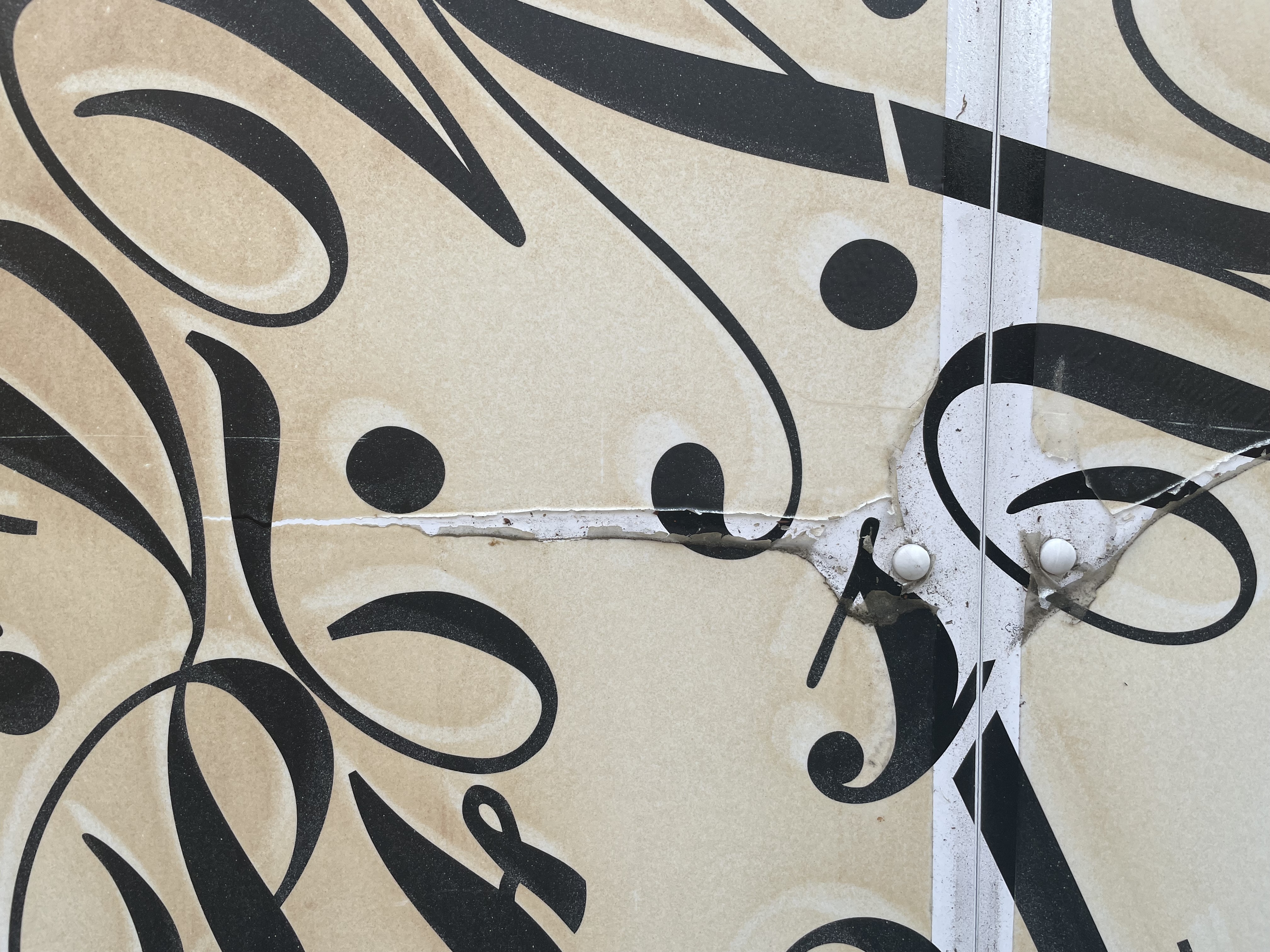
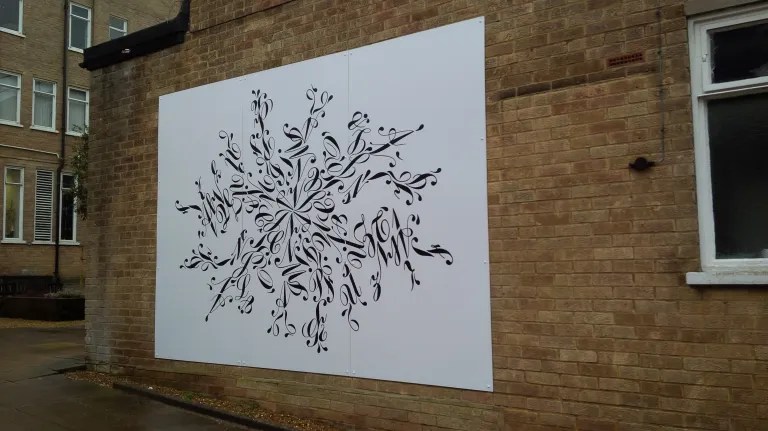
I’ve just been alerted to the state of my artwork at Roehampton University. I was commissioned to create a monumental piece of visual poetry on the side of Fincham Court at Roehampton University (my alma mater); the building seems to have been abandoned, the offices sit empty, and the piece has been allowed to degenerate and degrade.


Sadly, this seems more than a little symbolic as Fincham Court was once home to Roehampton’s Creative Writing department. Roehampton University instituted mass lay-offs and the elimination of a number of humanities-based programs including classics, anthropology, photography, and creative writing. Those shameful lay-offs, which included the destruction of the department of creative writing, has meant job losses for many exceptional peers and colleagues – folks who were vital to the UK poetry and prose communities, who demonstrated mentorship and teaching of the highest level, who were publishing consistently, and who were instrumental in my own career. Many were given untenable options for the continuance of their careers, and have found themselves in tenuous positions since.
The mural, in better days, looked like this:

I sure hope that Roehampton is dedicated to restoring this work in memory of the exceptional creative writers who taught, studied, and wrote in those halls…
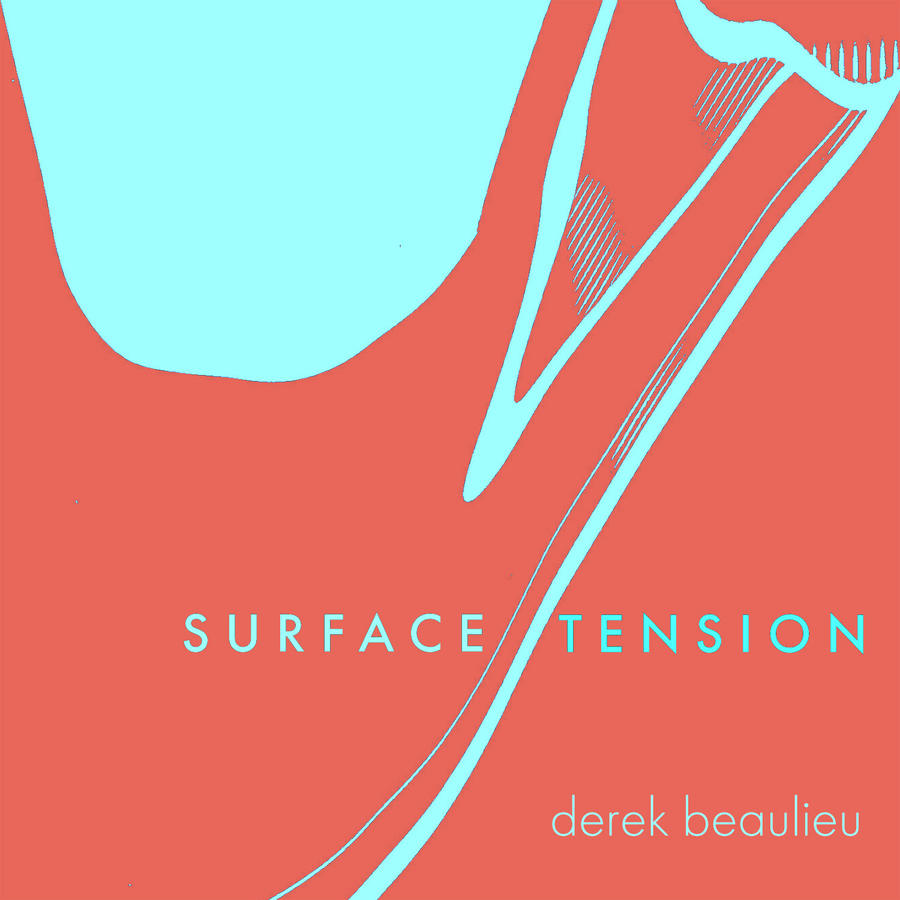
A reminder that Surface Tension remains in print from Coach House Books – and is a book that invites response. It includes poems from letraset and photocopy manipulation and degeneration – and each page asks the reader to imagine a few form of poetry, a liquid and flowing poetry. In Surface Tension, letters and words gather and pool into puddles of poetry; street signs and logos reflected in the oily sheen of polluted gutters of rainwater. Like a funhouse mirror reflecting the language that surrounds us, the pages drip over the margins, suggesting that Madge was right, we are “soaking in it!”
Here’s some of the responses to Surface Tension from across the internet – I invite you to read and respond to the book ,,, and send me your thoughts, i’ll share them here and build on this conversation!
Poets are often taught to “write what they know.” That dictum is supposed to bring comfort and solace, to suggest that poets can draw upon their own existence and that will be enough.
I disagree. Write what you don’t know.
Write what you wish you knew, what you wish you could read, the books that you encounter while dreaming, the manuscript which lies just on the edge of your fingertips.
Imagine the younger you, the you that yearned for the book that was just out of reach, the book that you wished was on the shelf—the book that you imagined would fulfill your fantasies, that would make you feel seen and heard, the book that would be just so cool to read. Write that. Write the book that you wish someone had handed to your teenage self. Be able to dream that you can hand that book to your teenage self and say “you’ll be ok.”
I believe that we don’t write for today; we write for tomorrow. A book is not a head of lettuce.[1] It doesn’t go bad. It stays on that shelf calling to a reader that we can’t even fathom. Imagine writing in terms of apprenticeship: learning takes place over several lifetimes of engaging with a subject; it is passed down intergenerationally from writer to writer. Compose with the next generation in mind: pose questions, offer potential solutions, suggest pathways for the reader-poets who come next.
Writing is not individualism; it’s the dream of community.
Continuously be mentored, and mentor in kind.
Celebrate the authors of the generations before you that have inspired and celebrate the authors of generations after you that are about to inspire.
There is no good, better, best in poetry.
[1] Unlike some contemporary politicians.
Three new editions from NO PRESS!:


THE MINUTE REVIEW #15
No Press’ little magazine of poetry, prose, and reviews; this issue includes contributions from Kate Siklosi, Greg Thomas, Steven Ross Smith, Douglas Messerli, Aaron Tucker, Billy Mavreas, Paul Eluard (translated by Ross Belot and Sara Burant), Laura Kerr, Hugh Thomas, Rachel Smith, and Erica Baum. limited edition of 75 handbound copies. $5ea
PENTERACT PRESS 2016-2025: A CONTRIBUTOR’S REFLECTION by Derek Beaulieu [MINUTE BOOK #1]
A personal essay reflecting on the history of the UK’s Penteract Press, alongside a retrospective interview with Penteract’s Anthony Etherin, and a full bibliography of the press. limited edition of 50 handbound copies. $5ea.
ANOTHER PIECE OF REASSURING PLASTIC [2nd edition] by Derek Beaulieu
A photocopy manipulation of “Another Piece of Reassuring Plastic“, this version treats the language of the original essay itself as plastic, manipulating and swerving the text into abstraction and degeneration. A visual essay. Limited edition of 50 handbound copies. $5ea
…and don’t forget that Moez Surani’s The Death of Volodya Putin remains available for $10ea.
To order copies paypal or email derek@housepress.ca …
New from NO PRESS: THE DEATH OF VOLODYA PUTIN by Moez Surani
7.5″ x 5″, 24 pp., red covers, blue flyleaves, white pages; handbound with white thread.
limited edition of 80 copies
$10 each — order via paypal to derek@housepress.ca


“The Death of Volodya Putin is a documentary fiction whose protagonist is Russian President Vladimir Putin. To build this narrative, I researched worldwide descriptions of his imagined downfall and demise. This assemblage of witnesses and speculations builds an imaginative rendering of the last years of Vladimir Putin’s life. The Death of Volodya Putin functions as a kind of reverse panopticon: instead of the figure of power deploying his centrality to surveil and discipline those on the periphery, the journalists, artists, activists, and citizens I cite focus unrelentingly on the destructive principal at the center.”
— Moez Surani
“Mordantly funny, boldly and originally conceived and brilliantly executed—an unlikely cross, if you will, between The Death of Stalin and the late great Fazil Iskander’s The Feasts Of Belshazzar. Moez Surani is entirely sui generis—one of the most talented and innovative writers out there.”
— Mikhail Iossel